# Working in chat
When typing beats talking, what to paste in, how long a source can be, and how to keep a thread useful.
Source: https://replicatelabs.ai/docs/coaching/chat
Last updated: 2026-09-03
---
Chat is the same coach with the same memory of your deals. It is the right tool for three jobs and the wrong one for a fourth.
Use chat for
Long source material. A transcript, a proposal, an RFP section, a whole email thread. Paste it and ask a specific question about it.
Drafting. An email, a follow-up, a business case, a note to a sponsor. Line-by-line iteration is awkward out loud.
Anywhere you cannot speak. Open-plan office, train, customer site.
Do not use chat for
Thinking a deal through.Open a call. Typing makes people summarise, and the summary is where the useful detail goes missing.
## Pasting source material
Paste the raw thing rather than your description of it. A transcript with the speaker labels intact is worth more than a tidied version, because who said what is exactly what the coach is reasoning about.
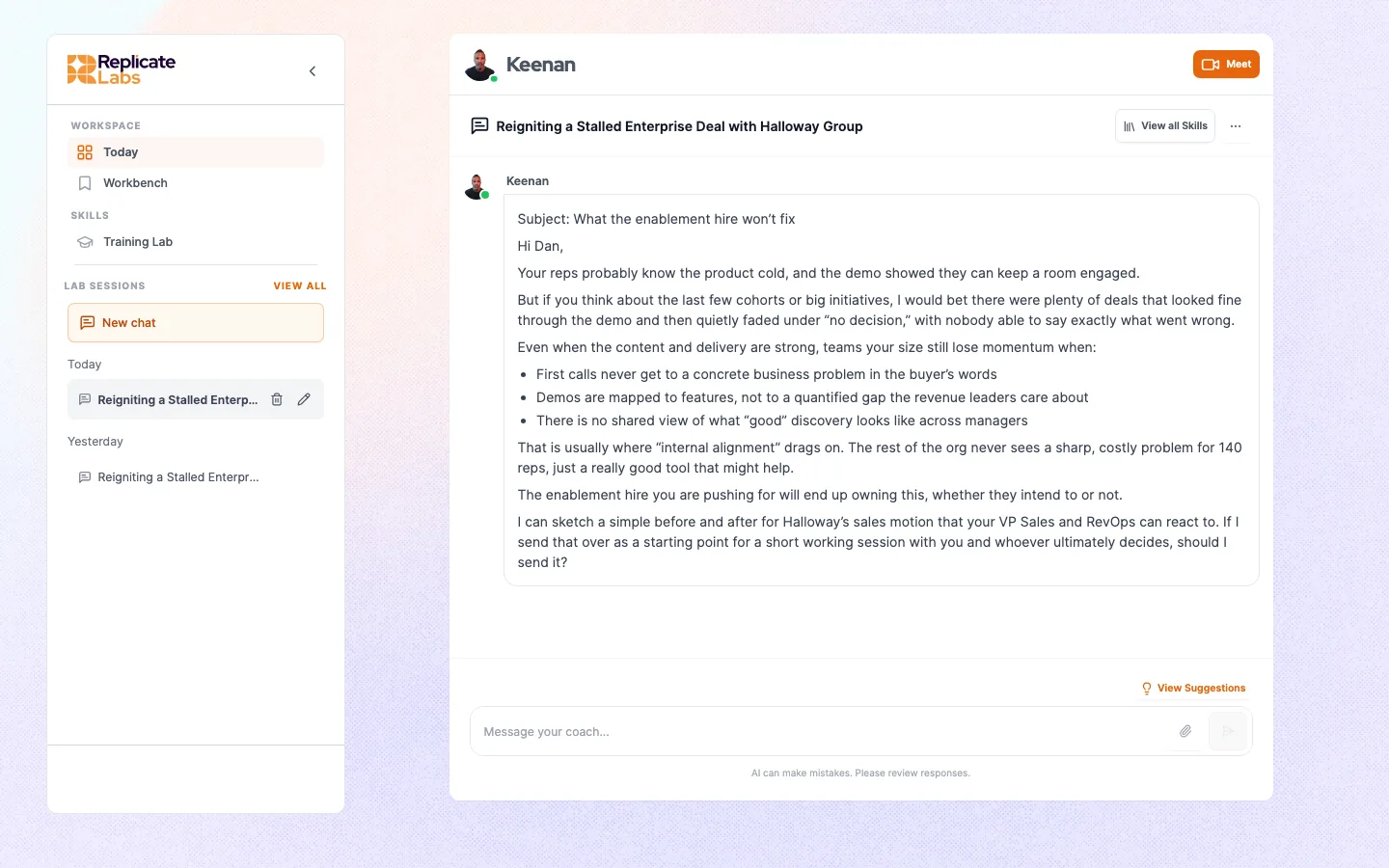
Asking for the artefact. The rep asked for the words rather than the advice, so the coach returned an email that could be sent, grounded in the account it already knows.
Then ask a specific question about it. "Improve this" produces generic edits. "The VP Finance said the timing was bad, is that a real objection or a brush-off, and what would tell us which" produces something you can act on.
## Keeping a thread coherent
A single conversation about a single deal stays sharper than one long thread covering four accounts. Start a new conversation when you change subject; the coach's memory of the account carries across conversations anyway, so you lose nothing by doing it.
## Switching coach
If your account runs more than one coach, the selector at the top left switches between them. Your memory of an account follows you rather than living in one coach, so switching does not mean re-explaining the deal.
The platform remembers your last selection between sessions. If the buttons or the behaviour look wrong, check which coach is active before assuming a fault.
## Chat and calls share memory
Anything established in a call is available in chat and the reverse. A common and effective pattern is to talk the deal through, then switch to chat and ask it to write the follow-up email off the back of the conversation you just had.