
AI sales coaching is software that gives a sales rep ongoing, conversational coaching on their real deals and real conversations, the way a good sales manager would, but available on demand. It diagnoses what's actually happening in a deal, pushes back on the rep's assumptions, helps them prepare for calls, reviews the calls afterwards, and agrees a next action. The point of it is not knowledge. The point is changing what the rep does on the next live call.
That's the definition. If you only needed the definition, you can stop there. But "AI sales coaching" has become a label slapped on at least four different kinds of product, most of which don't coach anyone, so the rest of this is about telling them apart and knowing what good actually looks like.
This guide covers four things:
- Why AI sales coaching exists in the first place (a confession)
- What it is not, and the one-question test that exposes the pretenders
- What real coaching actually does, broken down into its working parts
- How to evaluate a tool before you sign anything
Let me start with the confession.
I spent a fortune teaching people things they immediately forgot
Years ago I ran enablement somewhere budget wasn't the constraint. We had the methodology. We had the workshops, the certification, the slide decks, the LMS with the completion bars that went a satisfying green. Our numbers looked excellent. Reps were trained. Reps were certified. Reps had passed.
And then they'd get on a real call and sell the way they'd always sold.
It took me an embarrassingly long time to accept what was happening, because the dashboard kept telling me everything was fine. We hadn't built better sellers. We had built better-educated sellers who sold exactly as badly as before, now with a certificate. The training measured whether they could recall the methodology in a quiet room. It never once measured whether they used it in a loud one.
That gap, between what a rep knows and what a rep does when a real buyer is on the line, is the entire reason AI sales coaching exists. We call it Performance Drift. Closing it is what good coaching is for.
Training proves a rep was taught. Coaching changes what the rep does. The whole industry confused the two.
Everything that follows is about that gap, or about products pretending to close it.
What AI sales coaching is not
Four products get sold under this banner. Three of them are genuinely useful. None of the first three is coaching.
It is not call recording and analytics
Tools that record calls, transcribe them, and show you trends are genuinely valuable. They tell you, accurately, what happened. But a recorder is a rear-view mirror. It shows you the rep talked for 70% of the call last month. It does not get into the car before the next call and help the rep ask a better question.
Knowing you have a problem and being coached out of it are different things, and a dashboard only does the first.
It is not a roleplay simulator
Practising a cold call against an AI buyer persona is good. Reps should do it. But a roleplay sim is a flight simulator, and a flight simulator does not know which actual flight you have on Thursday, with which actual passengers, in which actual weather.
Practice against a generic scenario builds general fitness. It does not coach the specific deal that's stuck in your specific pipeline right now.
It is not an LMS with an AI chatbot bolted on
This is the one to watch, because it looks the most like the real thing. It's still a course. It still delivers content, runs you through modules, and quizzes you at the end. The AI just makes the quiz conversational.
It measures completion and recall. It is the exact machine that, in my enablement days, produced a room full of certified reps who sold the old way. A nicer LMS is still an LMS, and an LMS coaches nobody.
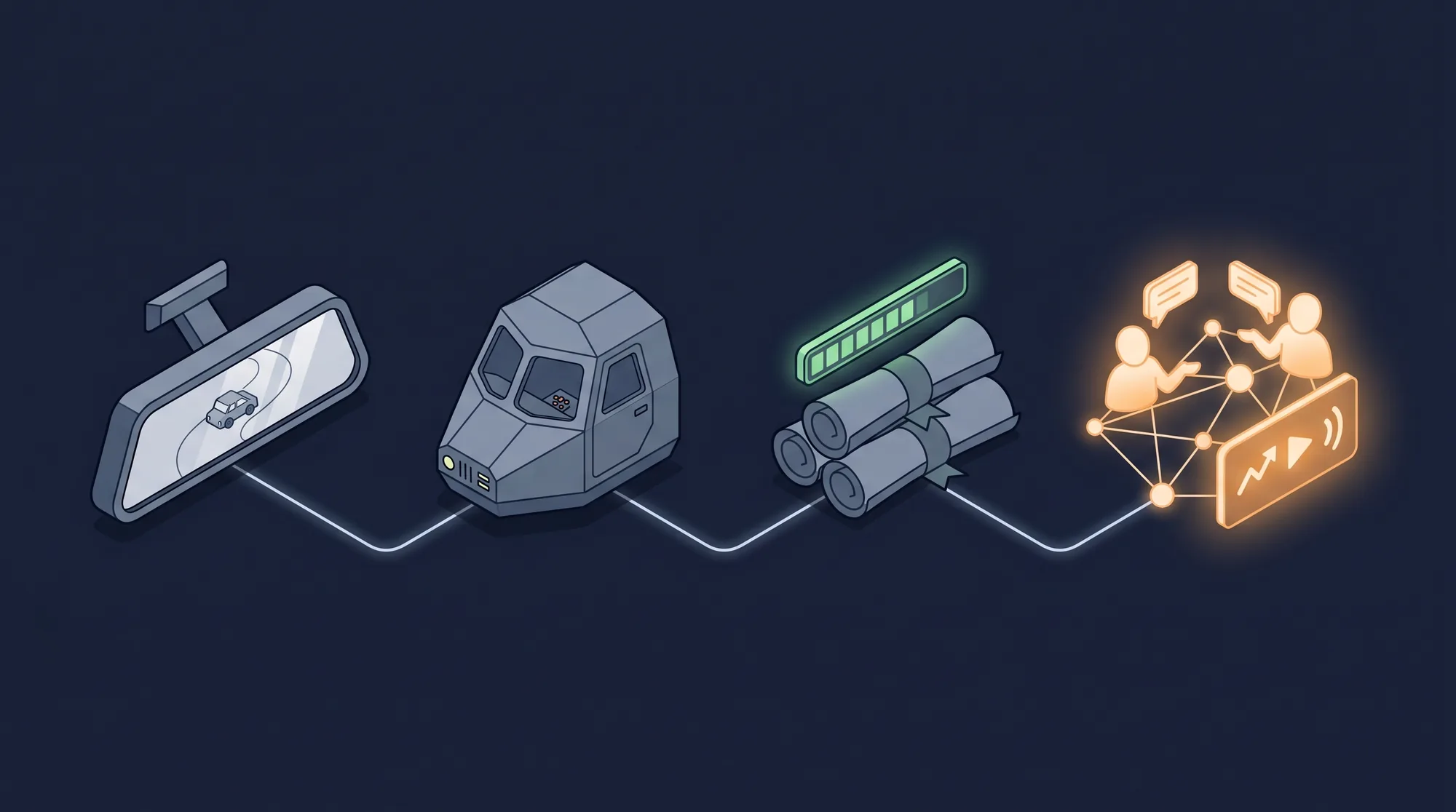
The four products, side by side
It's easier to see the difference when you put them next to each other. Here's the same four products, judged on what actually matters.
| Call recorder | Roleplay simulator | LMS + AI chatbot | Real AI sales coaching | |
|---|---|---|---|---|
| What it does | Records and analyses real calls | Practice against AI personas | Delivers courses and quizzes | Coaches real, live deals |
| What it measures | Talk ratios, call trends | Scenario scores | Completion, recall | Behaviour change on real calls |
| Works on your live pipeline? | Sees it, doesn't act on it | No, hypotheticals only | No | Yes |
| Will it disagree with the rep? | No, just reports | Within the scenario | No, it grades | Yes, and explains why |
| Timing | After the call | Before, in practice | Before, in a course | Before, during context, and after |
| Honest label | Analytics | Practice | Training | Coaching |
The first three are good at being what they are. The mistake is buying one of them and believing you've bought coaching.
Here's the test that cuts through all of it: ask what the product measures. If it measures completion, hours, recall, or test scores, it is a training or content product, however much AI is in the marketing. If it measures what changed in the rep's actual selling behaviour, it's coaching. The metric tells you what the product is really for.
What AI sales coaching actually is
Real coaching has a shape, and a human sales manager doing it well follows that shape without thinking. A coaching tool either replicates the shape or it doesn't. There are six parts to it.
1. It diagnoses before it advises
A good manager doesn't answer "how do I save this deal?" with a tactic. They ask questions first. What's the buyer's actual problem? Who else is involved? What's the cost of them doing nothing?
Real AI coaching does the same, and it will feel like more friction than reps expect from an AI tool. That friction is the product working. Advice given without diagnosis is just a generic answer with your company's name in it.
2. It works on real deals, not hypotheticals
Coaching is grounded in the rep's live pipeline. The stuck deal, the call on Thursday, the objection they keep losing to. It pulls real context, ideally straight from the CRM and the call recordings, so it isn't coaching a cartoon of the situation.
It's coaching the situation.
3. It pushes back
A coach that agrees with everything is a mirror, and you don't need an expensive mirror. If a rep's read on a deal is wrong, the coaching should say so. If an email is feature-led when it should be problem-centric, it should rewrite it and explain why.
The rep should be able to argue back, and the coaching should either hold its ground with a reason or genuinely update. That argument is where the learning happens.
4. It coaches across the whole deal cycle, not one moment
Before the call: what gaps do I need to close, what should I ask, what objections are coming. After the call: where did I get pulled into feature-selling, what signal did I miss. Between calls: this deal's gone quiet, what now.
And the unglamorous core of selling, writing the outbound email and the follow-up, drafted to the methodology rather than as generic AI copy.
5. It remembers
A coach with no memory makes a rep re-explain their world every session, which is exhausting enough that they stop. Real coaching carries a per-rep history. It remembers the deal, the goal, what it coached three weeks ago, and the rep's recurring habits.
The coaching gets more useful the more the rep uses it, because it knows them better.
6. It closes with an action
Every genuine coaching session ends with one agreed thing to actually go and do. Not a summary. An action.
That action is the bridge between the conversation and the behaviour, and behaviour is the only output that matters.
Coaching that meets the rep where they are
Good AI coaching changes its own role depending on the rep and the deal in front of them, and that is worth understanding.
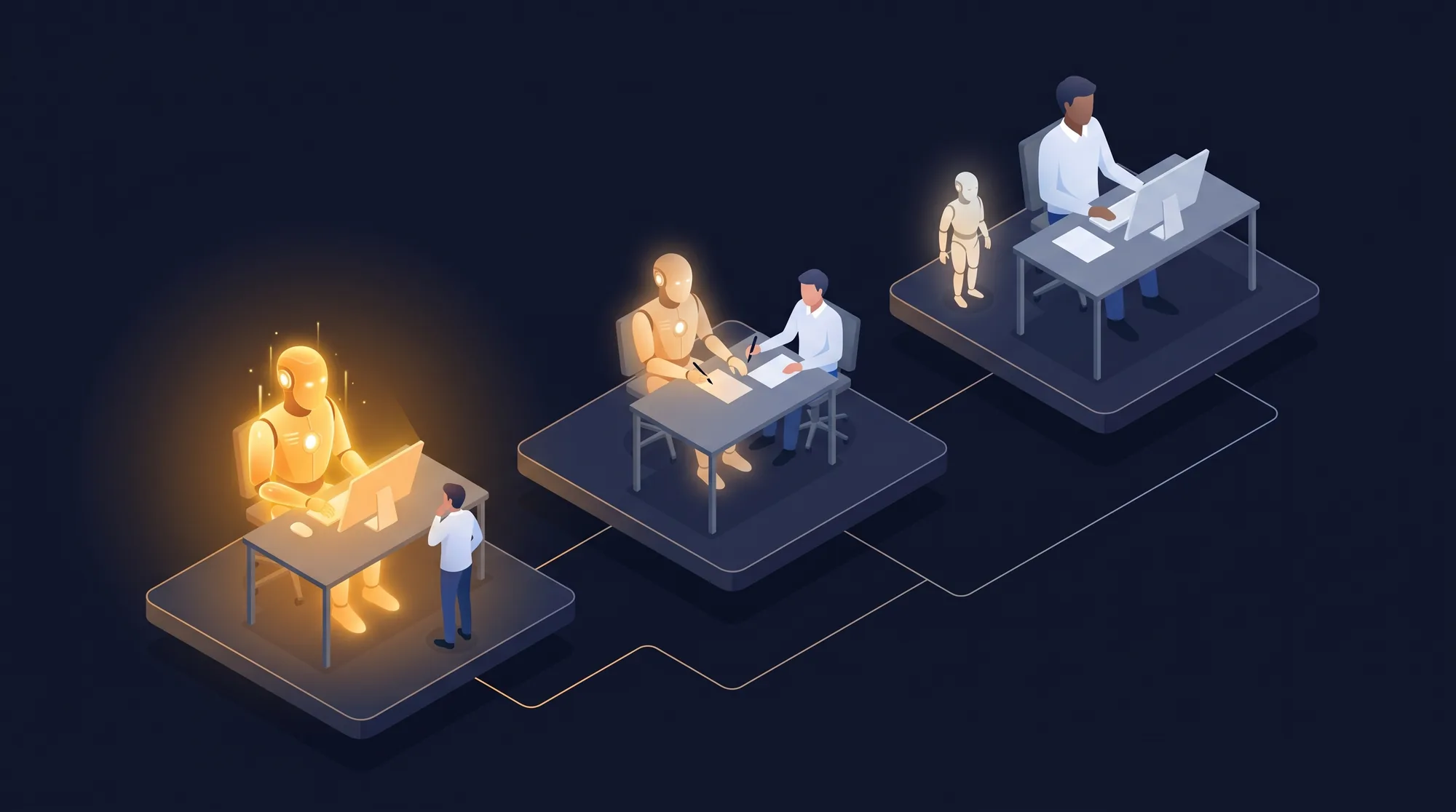
Where the rep is exposed, the coaching does more of the work. It drafts the email, builds the call plan, models what good looks like, so the rep sees the standard rather than just hearing about it. That is the right level of support for the procurement conversation the rep has never run.
Where the rep is finding their feet, it hands the pen over. The rep does the work, the coaching reviews and corrects in real time.
Where the rep is strong, it steps back. The interaction is lighter, more strategic, the occasional sharp question rather than the full scaffold.
This isn't a track the rep climbs once and finishes. The same rep, in the same week, gets heavy support on one deal and a single question on another, because the deals are different. The coaching reads the situation and dials in.
A coaching product that treats a fifteen-year veteran exactly like a brand-new SDR is not coaching. It's a script. Real coaching meets the rep where they are and deliberately works itself toward redundancy on each skill, which, incidentally, is the opposite of what a content product wants, because a content product needs you to keep consuming content.
How it fits a sales team
Three jobs, three audiences. The same tool does a different job depending on who's holding it.
For the rep, it's a working partner
Ten minutes before a call, straight after a bad one, before writing an outbound email, when a deal goes quiet. The most useful coaching lives where the rep already works, which in practice means inside Slack and the CRM, not behind another login.
For the manager, it changes the 1:1
Instead of spending the meeting discovering where a rep needs help, the manager arrives already knowing, because the patterns are visible. Which rep consistently skips the business-impact question. Which deal is green in the CRM but has a call recording full of unresolved objections.
The 1:1 stops being a status update and becomes actual coaching, because the catching-up already happened.
For enablement, it connects the training to the field
It's the thing that finally connects the training to the field. The methodology you rolled out is now reinforced on every real deal, not just in the workshop. The drift you could only suspect before becomes something you can see and close.
How to evaluate it
If you're assessing a tool, here's what I'd actually ask. Not the feature checklist. These.
- What does it measure? Completion and recall mean it's a content product. Behaviour change means it's coaching. This question alone disqualifies most of the market.
- Does it diagnose, or does it just answer? Bring it a stuck deal in the demo. If it gives you a tactic before it asks you a single real question, it's an answer engine.
- Does it work on real deals or only scenarios? Can it pull your actual CRM and call data, or does it only ever coach hypotheticals?
- Will it disagree with a rep? Tell it something wrong on purpose. A coach pushes back. A chatbot agrees.
- Does it remember? Does session two know what happened in session one, or does the rep start from zero every time?
- Whose methodology is it coaching? Generic best practice or your playbook, your battlecards, your buyer personas, your competitive positioning?
- Does it adapt to rep level? Or does the veteran get the same scaffolding as the new hire?
- Where does it live? In the rep's flow of work, or behind a login they'll forget about by Wednesday?
A genuine AI sales coaching product answers yes to most of those without flinching. If you are running that test across several tools, a side-by-side comparison will sharpen it.
Anything selling itself as AI sales coaching that mostly wants to talk about its content library and its completion analytics is, with respect, a very modern LMS.
The bottom line
The industry spent a decade getting very good at proving reps had been trained. AI sales coaching exists because being trained was never the goal. Doing the job differently on the next live call was always the goal, and we just kept measuring the wrong thing because the wrong thing was easier to put on a dashboard.
Training tells you a rep can recall the methodology. Coaching changes whether they use it when a real buyer is on the line.
If a tool can't tell you which one it does, it's doing the first one.
See it on one of your own deals. Replicate Labs gives reps real AI coaching on live deals, every day, the kind that diagnoses, pushes back, and ends with an action. High-quality coaching is free to get started, whether you're a rep, a manager, or running a whole team. Bring the messy deal, the one that's actually stuck, and put it to work at replicatelabs.ai.