
When my daughter started swimming lessons, the instructor didn't begin with a lecture about water. She got her in the pool.
That's the right instinct for a first AI coaching session too, and yet most reps do the opposite. They sit at the edge, dip a toe in, and type something deliberately vague to see what comes back. I understand the impulse. A new tool feels like something to be tested. But a coach isn't a tool you test. It's a colleague you bring a problem to. And the quality of your first session is decided almost entirely by what you walk in with. (If you have not yet, how an AI coach actually works is worth two minutes first.)
So here's the honest guide to your first 60 minutes with Keenan.
Bring something real, not something safe
This is the whole thing. If you take one line from this piece, take this one.
The single biggest mistake in a first session is bringing a hypothetical. "Imagine a SaaS deal worth fifty grand" gives Keenan nothing to work with, so he gives you nothing back, and then you conclude AI coaching is generic. It was generic because you were.
Bring the deal you actually lost sleep over this week. Specifically, pick one of these:
- A deal that's gone quiet and you genuinely don't know why.
- A call you have coming up that matters more than the others. The pricing conversation, the QBR, the demo with the new stakeholder. Worth preparing for properly.
- An objection you keep running into and have never had a clean answer for.
- A prospect who's been ghosting you for two or three weeks.
- An account you want to break into and can't find the door.
Real names, real numbers, real awkward silences. The messier the better. Keenan is at his most useful exactly when the situation is at its most uncomfortable.
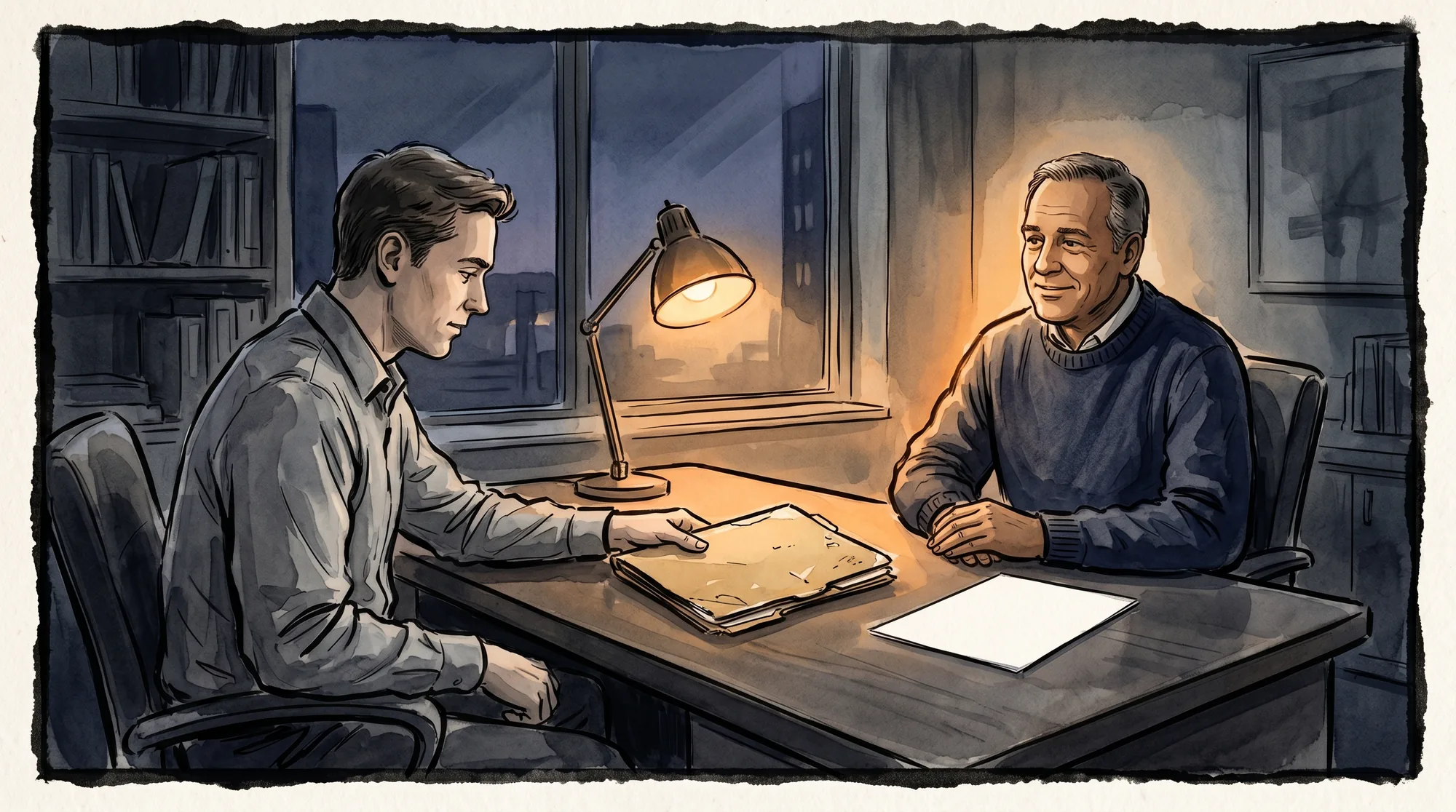
What a good first session actually looks like
Here's what surprises people. Keenan will ask you questions before he gives you a single piece of advice.
This can feel like friction. You came for an answer and you're getting an interview. Sit with it. He's diagnosing before he prescribes, because advice given before diagnosis is just a guess in a confident voice. He'll want to know why the buyer thinks they have a problem, what that problem costs them every month it goes unsolved, and who else has to say yes before anything gets signed.
He'll also push back. If your read on the deal is off, he'll say so. If your email is feature-led when it should be problem-led, he'll rewrite it. You're allowed to disagree with him. Argue your corner. He'll either update his view or explain his reasoning, and that back-and-forth is where the actual value lives. A coach who only ever agrees with you isn't coaching.
What "pushing back" actually sounds like
People hear "the coach pushes back" and picture something adversarial. It isn't. It's closer to a sharp colleague refusing to let you skip a step. Here's a real shape of it. A rep brings a stalled deal, convinced the problem is price.
Rep: This deal's gone quiet. I think we're too expensive. They've gone with a cheaper option.
Keenan: Maybe. Before we agree on that, what did they actually tell you the cost of their current problem was? In money, per month.
Rep: We didn't get into exact numbers. But it's clearly slowing their team down.
Keenan: Then I'd push back on "too expensive." You can't be too expensive relative to a problem nobody has sized. If they don't know what the problem costs them, your price isn't being measured against anything. It's just a number on its own, and a number on its own always looks big. What makes you confident the problem was even worth solving to them?
Rep: Honestly? The champion was keen. I assumed the urgency was there.
Keenan: That's the thing worth looking at. Not the price. The deal didn't stall because you were expensive. It stalled because the problem was never quantified, so there was no urgency holding it together. Who, other than your champion, has actually felt this problem? That's the next conversation, and it isn't a discount conversation.
Notice what happened there. The rep walked in with a diagnosis, "we lost on price," and walked out with a different one, "I never quantified the problem." Keenan didn't tell the rep they were wrong. He asked the question the rep had skipped, and let the answer do the work. That's the back-and-forth. It can sting slightly in the moment. It is also the entire reason the session is worth more than a search engine.
And at the end, he'll agree a next action with you. One concrete thing to go and do. In the exchange above, that action writes itself: go and find one stakeholder beyond the champion and get them to put a monthly cost on the problem. That's not a nice-to-have. That is the point of the session.
A good first session in one sentence
You leave with something you're actually going to use. A rewritten email. A talk track. A question you hadn't thought to ask. A clearer, possibly less comfortable, read on whether that deal is real.
If you've got that, the session worked. Come back tomorrow.
The common first-session mistakes
I've watched enough first sessions to know how they go wrong. They go wrong in the same four ways.
1. Treating it like a search engine. You ask a question, get an answer, close the tab. Keenan isn't built for the one-shot question. He's built for the back-and-forth. Stay in the conversation past the first reply.
2. Bringing the easy deal. Reps instinctively bring the deal that's going well, because it's a more comfortable conversation. But a healthy deal has nothing to coach. Bring the one that's a mess.
3. Defending instead of disclosing. When Keenan asks why a deal is stuck, the honest answer is sometimes "I never properly qualified it." If you dress that up, you get coached on the dressed-up version. Tell him the unflattering truth. He's not your manager and there's no performance review at the end of this.
4. Trying a roleplay first. Roleplay is genuinely good, but it works better once Keenan understands a real situation. Have one session on a live deal first. Then tell him the scenario, who the buyer is, what stage, what you're trying to achieve, and let him play the buyer. He won't make it easy, and that's the point.
One last thing
Don't save it for a quiet moment that never comes. Your first session works best when there's a real deal on the line and a real call in the diary, because that's when the advice has somewhere to land. (New to all of this? Our complete guide to AI sales coaching is the wider context behind that first session.)
Bring the deal that's keeping you up. That's not the worst thing to coach. It's the only thing worth coaching.