
There's a restaurant near my house that I keep going back to, not because the food is incredible, but because they bring the menu to your table, take your order at your table, and bring the food to your table. Revolutionary stuff, right? (Sorry, couldn't resist.)
But here's the thing. There's another restaurant down the road that makes you queue at a counter, order on a tablet mounted to the wall, then go sit down and wait for your number to flash on a screen above the kitchen. The food might even be better. I almost never go there.
The difference isn't quality. It's friction. One meets me where I am. The other makes me go to it.
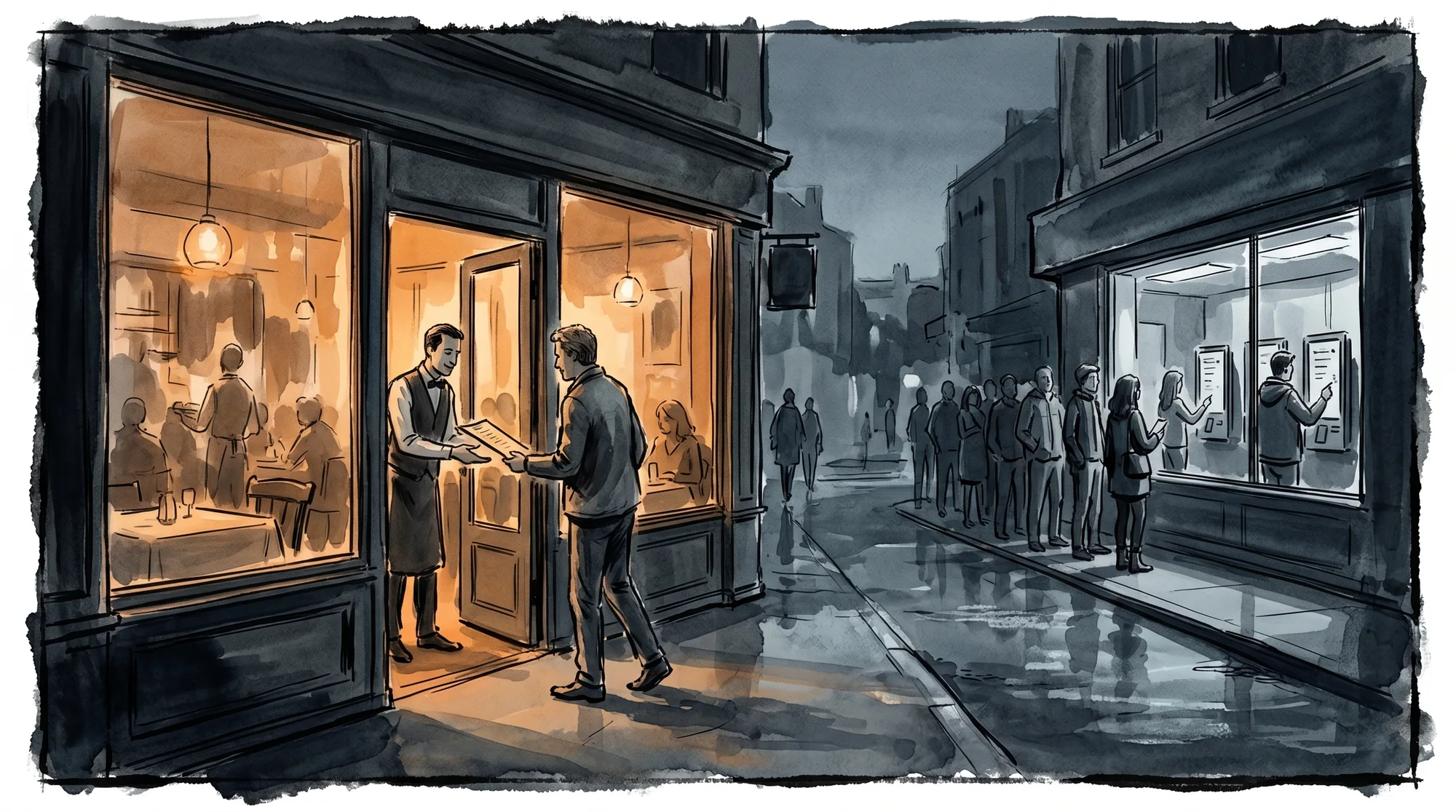
Every sales technology vendor in the world just read a Gartner report that said exactly this, and then built the tablet-on-the-wall version anyway.
What Gartner actually said
Gartner has been banging this drum for a while now. Their research on sales enablement and coaching technology is pretty clear: for coaching and enablement to be effective, it must happen in the flow of work.
Not before the work. Not after the work. Not in a separate application that the rep has to remember to open. In the workflow. Whilst they're doing the job.
This isn't a controversial position. It's backed by learning science (spaced repetition, contextual retrieval, the forgetting curve), by behavioural research (friction kills adoption), and by the basic observable reality that sales reps are busy people who will not add another tab to their browser unless something forces them to.
Gartner's point was simple and powerful: coaching that lives outside the workflow doesn't get used. Coaching that lives inside the workflow becomes part of how the rep sells.
It's not rocket science.
What every vendor did instead
So what happened? Every vendor in the enablement and coaching space looked at this research, nodded sagely, and then built a Chrome extension.
I'm not even exaggerating. Go look at the product pages. "AI coaching sidebar." "In-CRM coaching assistant." "Browser extension that surfaces insights while you work." "Coaching panel that sits alongside your Salesforce tab."
That's not in-workflow. That's adjacent-to-workflow. And there's a massive difference.
An adjacent-to-workflow tool is something that exists near your work but requires you to actively engage with it. You have to click the sidebar. You have to open the extension. You have to glance at the panel. You have to remember it exists.
An in-workflow tool is something that meets you inside the thing you're already doing. You don't go to it. It comes to you.
The sidebar is the tablet on the wall. The rep still has to walk over to it.
The adoption problem nobody talks about
Here's what I find fascinating. These same vendors will publish case studies bragging about "85% adoption in the first quarter!" and then go very quiet about what happens in quarter two.
Because here's the dirty secret of sidebar-based tools: the novelty wears off in about 6 weeks.
Week 1: "Oh cool, there's an AI thing that pops up when I'm in Salesforce." Week 3: "That sidebar keeps telling me stuff I already know." Week 6: "I unpinned it because it was taking up screen space." Week 12: Nobody remembers it exists.
I've seen this pattern with at least a dozen tools across the companies I've worked with. The extension gets installed during onboarding, gets used for a few weeks, and then quietly dies. The vendor still counts the install as an "active user" for 90 days. Everyone's happy. Except the rep, who's still not getting coached.
Adoption isn't installation. Adoption is habitual use. And habitual use requires zero friction.
What "in-workflow" could actually mean
This next part is a thought experiment, not a product tour. I want to be precise about that, because the whole point of this piece is that the industry over-claims. So: here is where I think genuine in-workflow coaching is heading, not a checklist of things any tool ships today.
Picture the end state. A rep finishes a hard call with a CFO who is pushing back on pricing. Coaching meets them in the moment that matters, not in a sidebar bolted onto an application they have to remember to open. A manager opens the pipeline for a deal review and the coaching context is already there, attached to the deal, rather than sitting in a separate tool. A rep prepping at 9:47pm on a Tuesday for a procurement objection they're dreading can get coached now, in the channels they already live in, not in a 1:1 two days away.
That is the bar. And it's worth being honest that nobody, us included, has fully closed the distance to it. The industry isn't there. We aren't there. What I'm describing is the direction the category has to move, not a feature comparison you can run today.
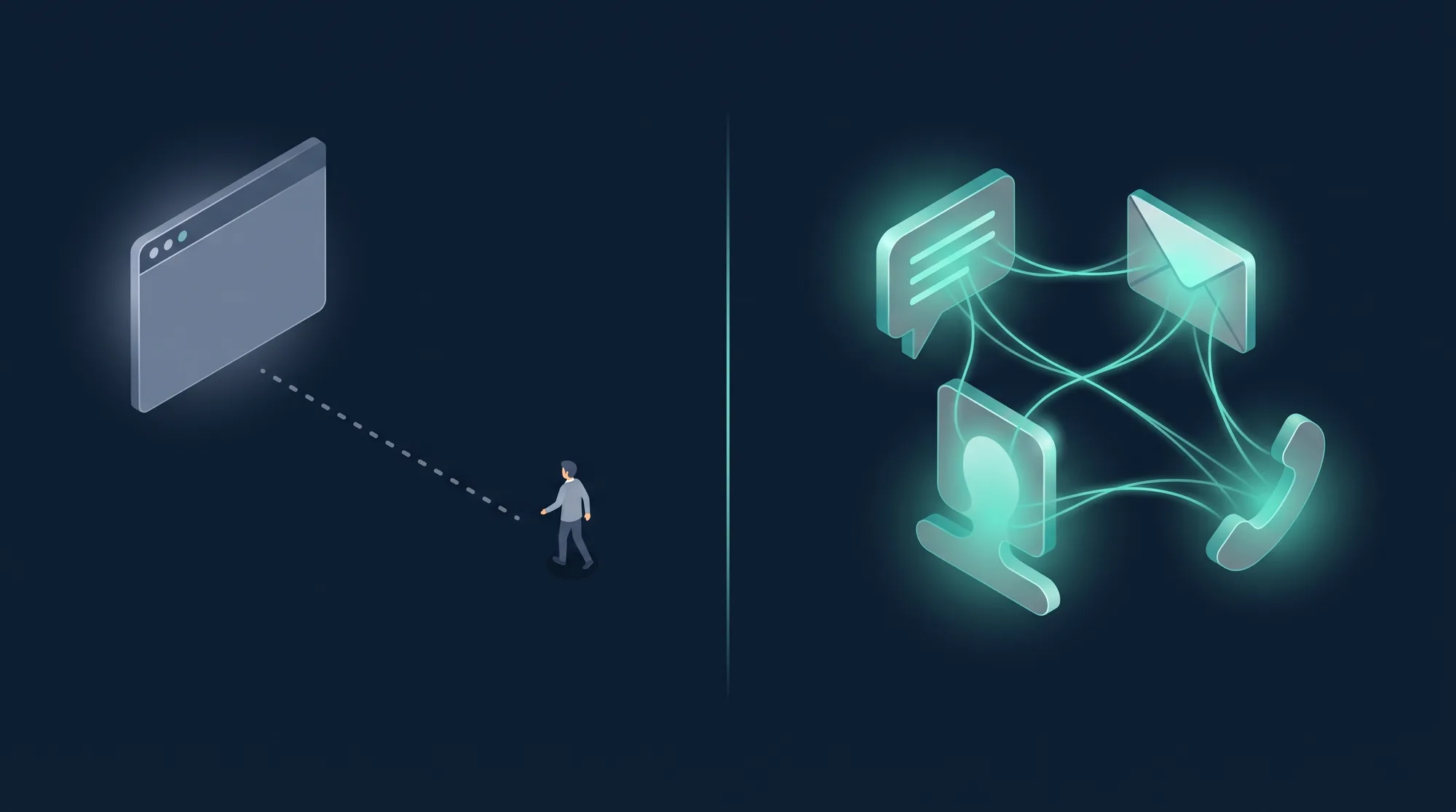
The difference that defines the end state is who initiates the movement. In adjacent-to-workflow, the rep goes to the coaching. In true in-workflow, the coaching comes to the rep. Most of what exists in 2026, ours included, still asks the rep to come to it. Closing that gap is the work.
Why this keeps happening
I think the sidebar obsession exists for a pretty simple reason: it's the easiest thing to build.
Building a Chrome extension or a Salesforce sidebar is a known pattern. There are frameworks for it. The technical lift is manageable. You can ship it in a quarter. It looks good in a demo because the prospect can see it right there, sitting prettily next to their CRM.
Building genuine in-workflow coaching is harder. Much harder. You need to integrate with Slack, with email, with calendar tools, with the actual communication channels reps use every day. You need to handle asynchronous conversations. You need to understand context across multiple touchpoints. You need to be available when the rep needs you, not when they remember to open your tool.
The vendors built the easy version and wrapped it in Gartner's language.
That's not cynical. It's just accurate.
The litmus test
Here's a simple test I'd encourage any buyer to apply when evaluating coaching or enablement tools:
If every rep on your team uninstalled the browser extension tomorrow, would they still receive coaching?
If the answer is no, it's not in-workflow. It's a sidebar with good marketing.
If the answer is yes, because the coaching lives in Slack, in email, in the tools they can't uninstall without being unable to do their job, then you've got something that might actually stick.
The second test: does the coaching come to the rep, or does the rep go to the coaching?
If the rep has to open a tab, click a button, or navigate to a panel, it's adjacent. If the coaching shows up in their existing flow without any additional action, it's genuine.
Gartner's research wasn't about technology form factors. It was about behavioural science. People do what's easy. If coaching is easy to access, they'll use it. If it requires even a tiny amount of extra effort, they won't.
Every sidebar in the world is a tiny amount of extra effort. And it's enough to kill adoption.
The bottom line
Gartner said "in-workflow" and the industry heard "add a sidebar." The result is a generation of coaching and enablement tools that look great in demos and die in deployment. For more on how we think about this, see our complete guide to AI sales coaching.
Real in-workflow coaching doesn't live in a sidebar. The standard to aim at is coaching the rep barely has to reach for, that shows up close to the moment of the work rather than in a tab they'll forget. No vendor has fully arrived there yet. The honest question for any buyer isn't "does this tick the in-workflow box" but "how much friction is still between the rep and the coaching, and is the vendor closing that or marketing over it."
Treat "in-workflow" as a direction of travel, not a feature you can buy finished. Judge vendors on how seriously they're closing the friction, not on how confidently they use the word.
Replicate Labs is building toward coaching that meets reps closer to the work, with less friction than a sidebar they'll forget to open. If you're a rep, a manager, or running an entire sales floor, high-quality AI coaching is free to get started. Just register and go.