
I'm pretty rubbish at poker. Always have been. But I've played enough hands to know one thing: the player who's brilliant at reading the table doesn't automatically know how to bluff. Reading is reactive. Bluffing is proactive. They use completely different muscles.
Gong is the best table-reader in sales technology. And they've just decided they can bluff.
What Gong does brilliantly
Let me be clear from the start: I have enormous respect for what Gong has built. Their conversation intelligence platform is, by most accounts, the gold standard. They record calls, analyse patterns, surface insights, and give revenue leaders a retrospective view of what's happening across their pipeline.
If you want to go back over a lost deal and see what happened on the calls, Gong gives you the record. If you want to see which talk tracks correlate with closed-won outcomes, Gong can show you. If you want to compare the behaviours of your top performers against everyone else, Gong gives you the data.
That's analytics. And analytics is where Gong is genuinely world-class.
The problem is that Gong has looked at their analytics infrastructure and decided the logical next step is coaching. It makes sense on a slide deck. "We already know what good looks like. Now we'll teach reps how to do it." Neat story. Tidy strategy. And I think it's fundamentally wrong.
Analytics and coaching are different products
Here's the distinction that matters. Analytics answers the question: what happened? Coaching answers the question: what should I do next?
Those aren't variations of the same question. They're entirely different cognitive tasks.
Analytics is retrospective. It looks at recordings, transcripts, patterns. It tells you that your reps are talking 72% of the time on discovery calls when the benchmark is 40%. That's useful. Genuinely useful.
But knowing that you talked too much on your last call doesn't teach you how to ask better questions on your next one. Knowing that top performers use a particular framework doesn't mean a struggling rep can suddenly deploy that framework under pressure, live, with a sceptical buyer pushing back.
The gap between "here's what you did wrong" and "here's how to do it right" is where coaching lives. And it's a much harder problem than analytics.
Analytics-shaped coaching
Here's what I predict will happen. Gong will build coaching features on top of their analytics engine. The coaching will look something like: "On your last call, you missed an opportunity to ask about budget. Here's a clip of a top performer handling budget discovery."
That's not coaching. That's a highlight reel with a label on it.
Coaching requires context. Not just "what did you say on the last call" but "what's this specific deal's situation, what has the buyer told you, what are the gaps in your understanding, and what should your next move be given all of that?"
When you build coaching from an analytics foundation, you get analytics-shaped coaching. You get insights dressed up as advice. You get backward-looking data pretending to be forward-looking guidance.
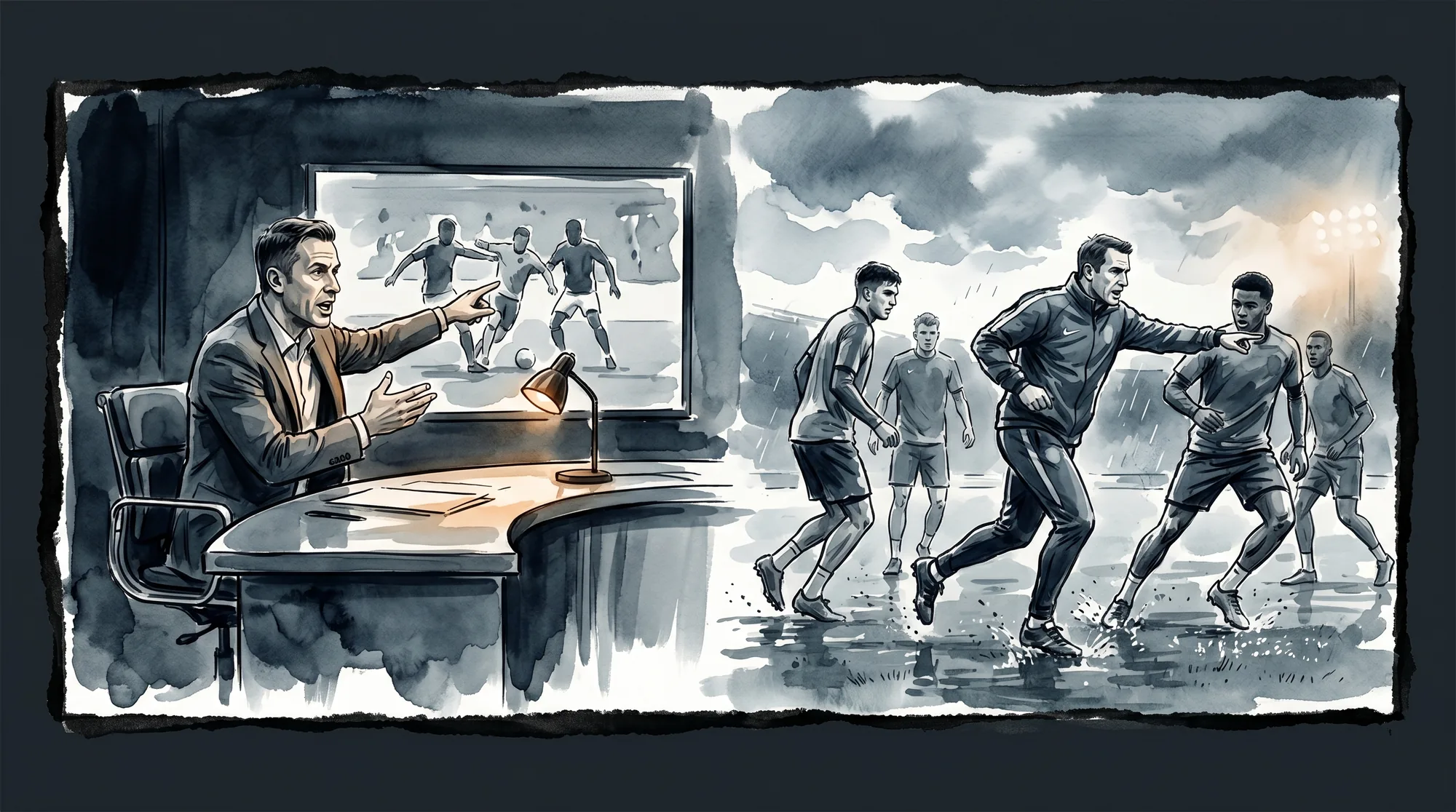
It's the difference between a football pundit analysing why a team lost on Saturday and a manager running a training session on Tuesday to fix the problem. The pundit is brilliant at telling you what went wrong. The manager has to actually change behaviour. They're different jobs.
The infrastructure problem
There's a technical dimension here too. Gong's infrastructure is built to ingest, process, and analyse call recordings. It's optimised for pattern recognition across large datasets. That's a brilliant architecture for analytics.
Coaching infrastructure needs to do something different. It needs to understand a specific deal's context, simulate buyer responses, adapt to a rep's skill level in real time, and provide guidance that's actionable in the moment, not after the fact.
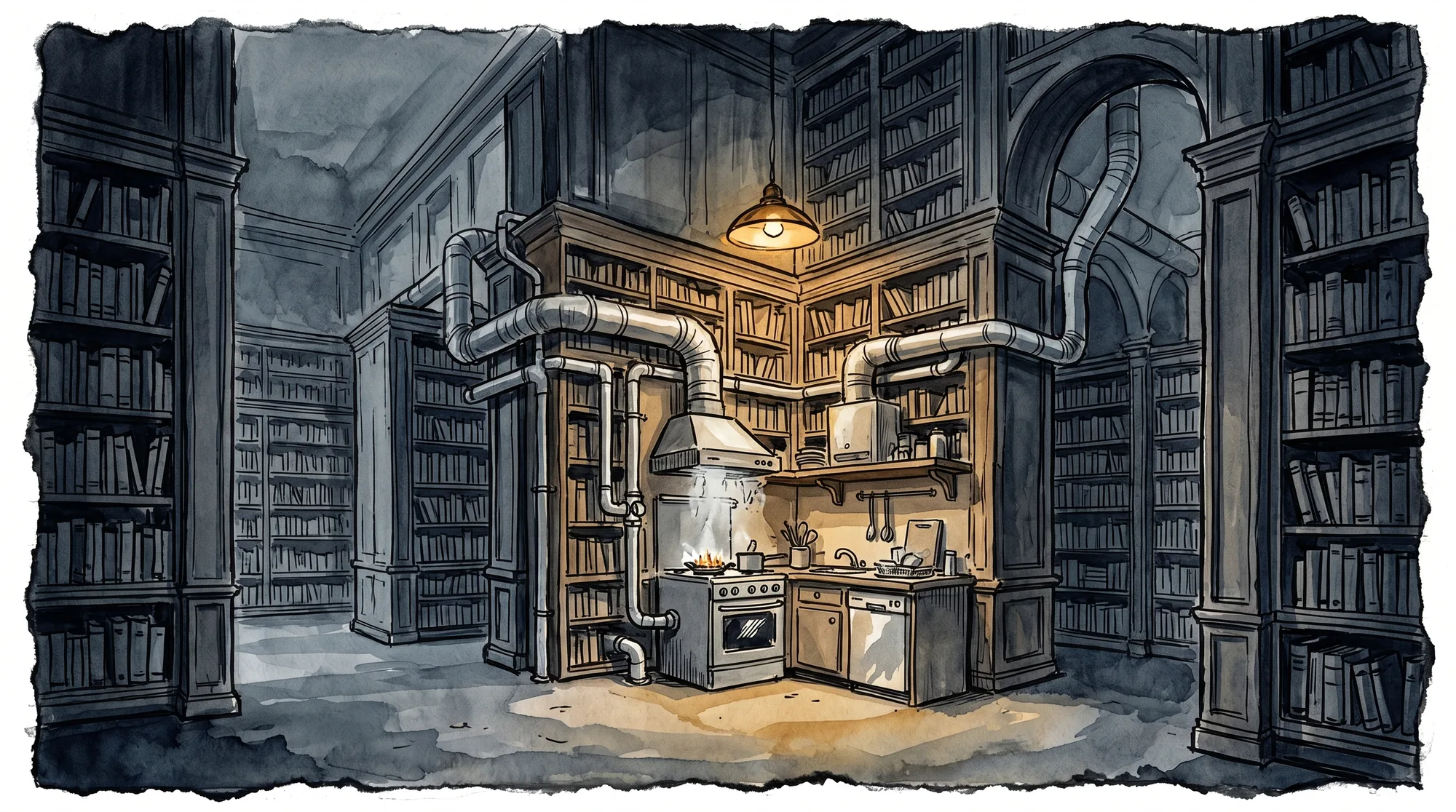
Bolting coaching onto an analytics platform is like adding a kitchen to a library. Both are useful rooms. But the plumbing, ventilation, and workflow are completely different. You can make it work, but it'll always feel like a kitchen that was designed by a librarian.
The bundling temptation
I understand why Gong is doing this. The market is screaming for coaching solutions. Every CRO wants to improve rep performance. And if you already have the customer relationship and the call data, it seems wasteful not to offer coaching on top.
But bundling creates mediocrity. We've seen this film before. CRMs that added marketing automation. Marketing platforms that added CRM. Help desks that added sales tools. The second product is never as good as the first because it inherits the assumptions and architecture of the original.
Gong's coaching will be good enough for organisations that don't take coaching seriously. And there are a lot of those. They'll tick the box, point to the dashboard, and move on.
But for organisations that actually care about changing rep behaviour, about making coaching a competitive advantage, about measuring whether coaching translates to deal outcomes, "good enough" isn't good enough.
What analytics-shaped coaching looks like when it fails
Let me make the abstract concrete with a worked example, because "analytics-shaped coaching" is easy to nod along to and harder to actually picture.
A rep, Daniel, has a second meeting with a mid-market prospect on Thursday. The first call went fine. The buyer was warm, asked good questions, agreed to bring a colleague to the next one. Daniel needs to know one thing before Thursday: how does he turn a warm second meeting into a deal with a real next step, rather than a pleasant chat that drifts.
Here is what analytics-shaped coaching gives him. On Wednesday, the platform surfaces a card: "On your last call you spoke 68% of the time. Top performers speak 45%. Here is a clip of a top performer running a discovery call." All of that is true. None of it helps. Daniel's problem on Thursday is not his talk ratio on a call that already happened. His problem is that he has a specific buyer, a specific colleague joining, and no plan for the conversation in front of him. The platform handed him a statistic about the past and a clip of a stranger. He still walks into Thursday unprepared, because the tool answered "what happened" when he asked "what do I do."
Now here is what deal coaching gives him. The coach asks what Daniel actually learned in the first call: the buyer mentioned a renewal deadline, never named a budget, and the colleague joining Thursday turns out to be the person who controls that budget. The coach points out that Daniel has a stakeholder he has never spoken to walking into the room, and helps him build the meeting around one goal: get that person to articulate, in their own words, what the problem is costing them. It helps him script the two or three questions that surface it. Daniel walks into Thursday with a plan for this deal, this buyer, this room.
Same rep. Same week. One tool told him about his past. The other prepared him for his next move. That is the gap between analytics and coaching, and you cannot close it by adding a coaching tab to an analytics product, because the analytics product genuinely does not know what Daniel's Thursday looks like. It only knows what his Tuesday sounded like.
What coaching actually requires
Real coaching, the kind that changes how a rep shows up on a call, requires a few things that analytics platforms aren't built for:
Deal-level context. Not "across your last 50 calls, here's a pattern" but "on this specific deal, with this specific buyer, here's what you're missing and here's your next move."
Proactive guidance. Coaching should happen before the call, not after. The rep needs to walk into the conversation prepared, not receive a report card afterwards.
Adaptive difficulty. A new rep and a 10-year veteran need different coaching. The system has to understand where someone is and meet them there.
Behaviour simulation. Reps need to practise handling objections, asking tough questions, and handling awkward conversations in a safe environment. That's a fundamentally different product from call recording analysis.
Outcome measurement. Did the coaching actually change the deal outcome? Not "did the rep watch the clip" but "did the deal move forward?"
Respect the lanes
I don't think Gong will fail. They're too good a company with too strong an engineering team. But I think they'll build something that looks like coaching on a demo, sells like coaching in a pitch, and feels like analytics with a coaching label once reps are actually using it.
And that's a shame. Because the coaching problem in sales is real, it's urgent, and it deserves purpose-built solutions, not features bolted onto platforms that were designed to solve a different problem. If you want the purpose-built version laid out properly, here is how AI sales coaching actually works.
Gong should keep being the best analytics platform in the market. They've earned that position. But coaching is a different game entirely. And being brilliant at reading the table doesn't mean you can teach someone else how to play.
Some companies analyse calls. Others coach reps. The best don't confuse the two.
Want to see what purpose-built AI coaching looks like? Replicate Labs was designed from day one to coach reps on real deals, not analyse recordings after the fact. Free to get started for reps and managers. Register at replicatelabs.ai