
Every sales team has a rep who is flawless in the pipeline review. Crisp on the methodology. Says all the right things about discovery, about multi-threading, about qualifying out early. Then you sit in on their actual call and none of it shows up. The buyer pushes back and the rep folds, pitches features, talks past the objection, asks for thirty minutes when they should have asked for one decision.
In the review they looked brilliant. On the call, the truth came out.
The entire sales training industry is built around the review, not the call. And reps are tired of it.
The L&D Assumption
Here's the assumption that underpins about 90% of the AI sales coaching market right now: reps need more practice. If we give them a safe space to rehearse discovery calls, handle objections, and refine their pitch, they'll be better when it counts.
The logic seems sound. Pilots run hours in the simulator. Surgeons rehearse a procedure before they ever stand over a patient. Why wouldn't salespeople benefit from the same thing?
Because the comparison breaks down in one critical place: timing.
A pilot trains on the ground, then flies. A surgeon rehearses, then operates. The two phases are separate by design. A salesperson has live deals running every single day, alongside whatever practice you give them. There is no "between." There is only now.
The rep doesn't need to rehearse a discovery call next Tuesday. They need to nail the discovery call that starts in 45 minutes.
What Reps Actually Want
I've spent years in and around sales teams. I've run enablement. I've built coaching tools. I've sat in on more pipeline reviews than I care to remember. And here's what I've learned from all of it:
Reps want help with the deal in front of them. Full stop.
Not a generic objection handling simulation. Help with the specific objection that a specific procurement director raised on a specific call 20 minutes ago.
Not a roleplay of a cold call. Help crafting the exact email they need to send to re-engage a champion who's gone dark on a deal worth 80k.
Not a practice session on MEDDIC. Help figuring out whether they actually have an economic buyer on Deal #47, and if not, what to do about it before the quarter closes.
The difference isn't subtle. It's the difference between a textbook and a colleague who knows the account. One covers the general case. The other helps you with the exact deal in front of you, right now.
Why L&D Loves Practice
I want to be fair to the L&D side, because I understand the appeal of practice-based tools. Practice is measurable. You can track completion rates, competency scores, roleplay attempts, and improvement over time. It generates beautiful dashboards that justify the programme's existence.
Practice also scales neatly. Build one roleplay scenario, deploy it to 500 reps. Done. Consistent, repeatable, auditable.
And practice feels safe. Nobody fails a roleplay in a way that costs the company a deal. The stakes are low, the learning environment is controlled, and the manager can review the recording at their leisure.
Practice is what L&D wants. Performance is what reps want. And those two things are not the same.
I'm not saying L&D is wrong to value practice. I'm saying they've let practice become the whole strategy, and reps have noticed.
The Adoption Problem Nobody Talks About
Here's the number that should keep every enablement leader up at night: voluntary adoption rates for roleplay platforms are dismal. I'm talking 10 to 20% of the sales floor actually using the tool without being forced.
You know what happens next. The platform gets mandated. Completion becomes a KPI. Managers start chasing reps to finish their simulations. And the whole thing becomes a compliance exercise that everyone resents.
When you have to force reps to use a tool, the tool isn't solving their problem.
Compare that with what happens when you give reps on-demand help with real deals. Our data shows voluntary repeat usage rates that are 2 to 3 times higher for deal coaching than for roleplay. No mandate required. No compliance tracking. Reps come back because the tool made their Tuesday afternoon easier.
That's the difference between building for what the organisation wants and building for what the rep wants.
The Performance Support Model
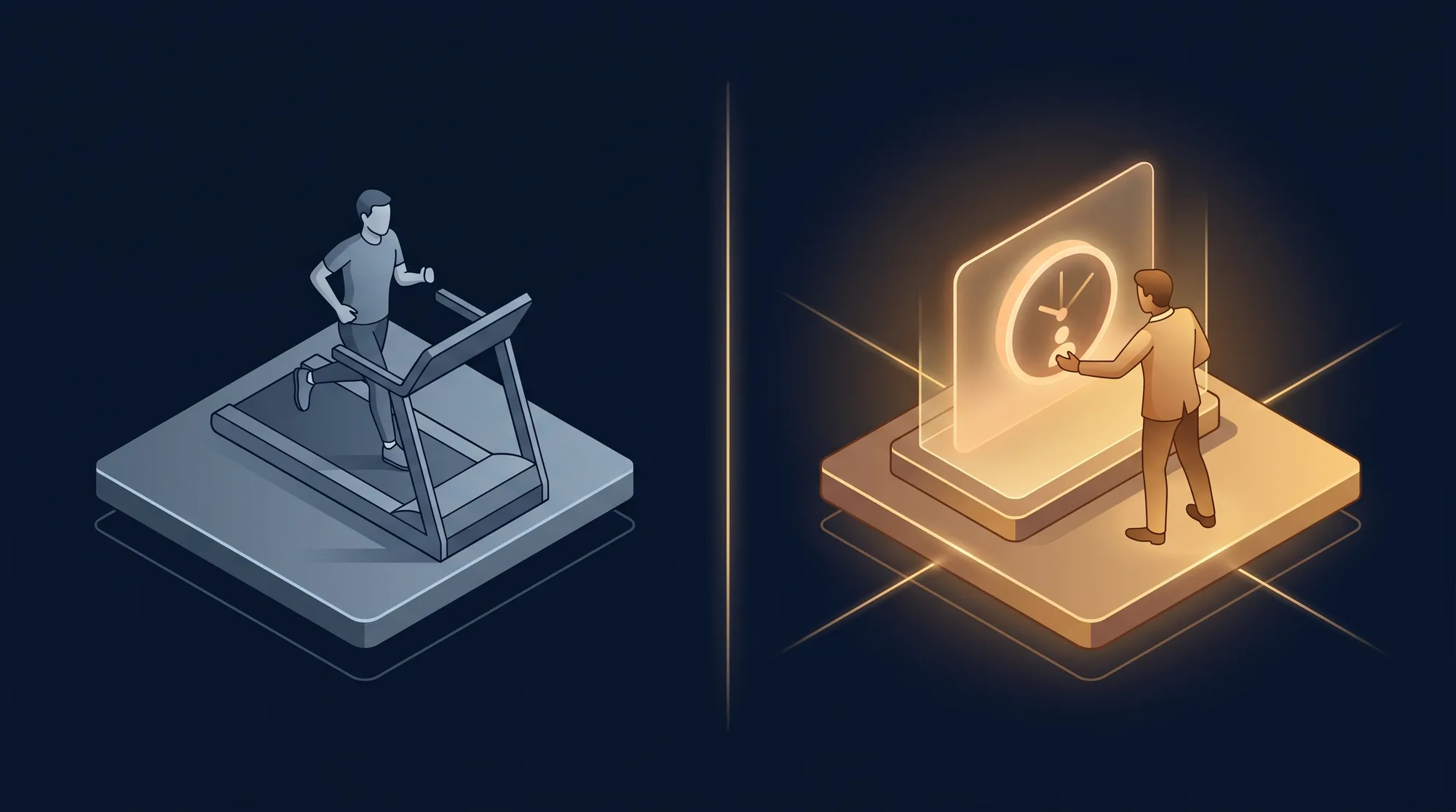
There's actually a well-established concept in learning science called performance support. It's been around since the early 1990s. Gloria Gery wrote about it. The idea is simple: instead of training people and hoping they remember, you give them support at the moment they need to perform.
Think of it as the difference between teaching someone to memorise a map versus giving them sat nav. Both get you to the destination. One requires weeks of preparation. The other works right now.
The best AI coaching isn't a training tool. It's a performance support tool that happens to make you better over time.
When a rep asks for help with a live deal, they learn. Not from a curriculum. Not from a simulation. From solving a real problem with real stakes. That learning sticks because it's immediately applied. There's no forgetting curve when the lesson and the application happen in the same hour.
What This Means for Buyers
If you're evaluating AI coaching tools right now (and based on the market, a lot of you are), here's the question that matters more than any feature comparison:
Does this tool help my reps with the deal they're working on today?
Not "does it have a roleplay engine?" Not "does it integrate with our LMS?" Not "does it have a content library with 500 scenarios?"
Does it help with today's deal? If the answer is yes, your reps will use it. If the answer is no, you'll be writing "improve adoption" on your next quarter's OKRs.
The Uncomfortable Reframe
The training industry doesn't want to hear this, but here it is: the era of practice-first coaching is ending. What replaces it is the performance-first model our complete guide to AI sales coaching sets out in full.
Not because practice is worthless. It isn't. There will always be a place for onboarding simulations, new hire rehearsals, and skill-building exercises.
But practice as the primary value proposition? Practice as the thing you lead with on your website, in your demos, in your pricing? That's a bet against what reps are telling you with their behaviour every single day.
Reps skip the roleplay. They never skip the deal help.
Build for what they never skip.
Build for performance.
Want coaching that helps with today's deal, not last quarter's training module? Replicate Labs is AI coaching built for performance, not practice. Reps, managers, and teams can get started free at replicatelabs.ai. No contracts. No forced adoption. Just coaching reps actually want to use.