
When I played football as a kid (badly, I should add), my coach would pull me aside after training and spend five minutes on whatever I'd got wrong that session. "You're dropping your shoulder before you pass. Watch." He'd show me. I'd try again. He'd correct me. Five minutes, once or twice a week, and I actually improved.
Here's the thing: he had 15 of us on the team and one training session a week. He could afford five minutes each because the maths worked.
Now picture a sales manager. Ten direct reports. Expected to coach each one weekly. Let's be generous and say 30 minutes per session (most coaching frameworks recommend 45-60 minutes, but let's be kind). That's 5 hours per week. Just on coaching.
Except that manager also owns a pipeline. They're running deal reviews. They're in forecast calls. They're in leadership meetings. They're doing 1:1s that aren't coaching (performance reviews, career conversations, admin). They're firefighting escalations. They're being asked to "step in" on strategic deals.
The average frontline sales manager has about 42 hours of work to fit into a 40-hour week before coaching even enters the equation.
So where does the coaching go? It doesn't. That's the crisis.
Let's do the maths
I love doing the maths on these things because it always tells a story that feelings can't argue with.
A typical B2B sales manager has 8-12 direct reports. Let's use 10 as a round number.
Coaching cadence recommended by most methodologies (MEDDIC, Sandler, Gap Selling, Challenger): weekly, 30-60 minutes per rep.
Let's take the minimum. 30 minutes per rep, 10 reps: 5 hours per week on coaching alone.
Now let's look at where their time actually goes:
- Pipeline reviews: 2-3 hours/week
- Forecast calls: 1-2 hours/week
- Leadership/all-hands meetings: 2-3 hours/week
- Deal escalations and "ride-alongs": 3-5 hours/week
- Administrative (CRM, reports, approvals): 3-4 hours/week
- 1:1s (non-coaching): 2-3 hours/week
- Hiring and onboarding: 1-2 hours/week (averaged)
- Email and Slack: 3-5 hours/week (conservative)
That's 17-27 hours per week before a single coaching conversation happens. Add the 5 hours for coaching and you're at 22-32 hours. Looks manageable on paper, right?
Except I left out the bit where the manager is also expected to carry their own number on strategic accounts. Or the "quick syncs" that eat another 3-4 hours. Or the QBRs. Or the comp disputes. Or the rep who's having a rough patch and needs an hour of your time on a Thursday afternoon.
The real number is closer to 45-55 hours per week, and coaching is the first thing that gets cut because it's the only thing without a calendar invite that someone else scheduled.
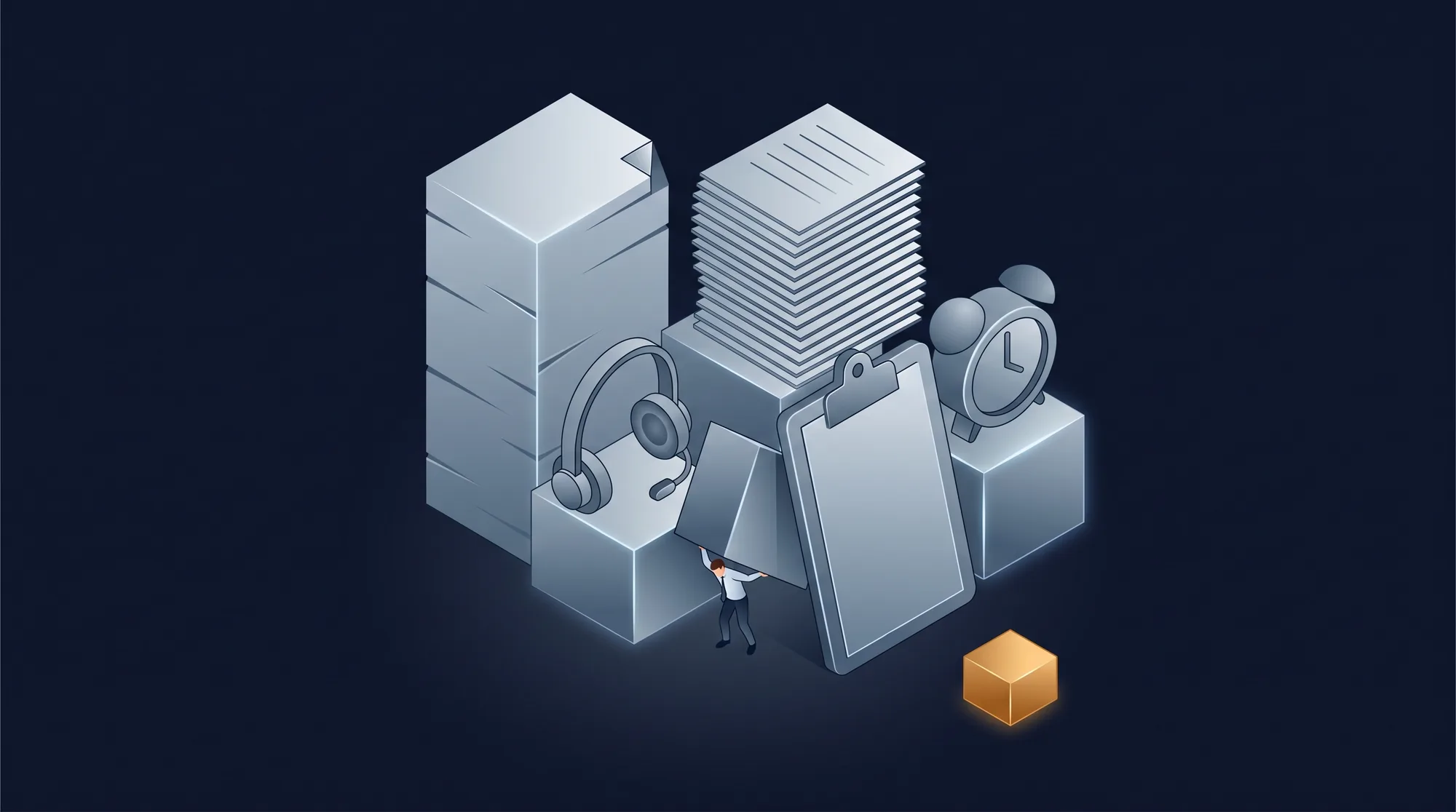
Think about that for a second.
The manager tax
Here's what kills me about this. We promote our best reps into management and then make it structurally impossible for them to do the one thing that would make them great managers: coach.
It's like promoting your best striker to manager and then making them spend all day filling out spreadsheets and attending committee meetings whilst the team trains without anyone watching.
We know, from every piece of research available, that coaching is the single highest-leverage activity a sales manager can do. 6sense's 2026 State of the BDR Report found support and coaching to be the single defining factor in BDR performance. CSO Insights found that organisations with a formal coaching programme saw 28% higher win rates, and its research also ties formal coaching to roughly a 19% improvement in win rates.
And yet the average rep gets less than 30 minutes of coaching per month. Not per week. Per month.
The coaching crisis isn't a coaching crisis. It's a manager capacity crisis.
What actually happens
When coaching time gets squeezed (and it always gets squeezed), one of three things happens:
1. Coaching becomes deal review. The manager sits down for their "coaching session" and immediately says, "So, where are we on the Acme deal?" That's not coaching. That's pipeline management with a coaching label on it.
2. Coaching becomes reactive. Instead of proactive, skill-building coaching, the manager only coaches when something goes wrong. A deal falls through, a call goes badly, a customer complains. The rep associates coaching with failure, not growth.
3. Coaching disappears entirely. The manager cancels the 1:1, or it becomes a 5-minute check-in over Slack. "How are things? Good? Great. Carry on." The rep gets no feedback, reinforces bad habits, and the manager wonders why performance isn't improving.
Sound familiar?
I've spoken to hundreds of sales leaders, and almost every single one admits to at least one of these patterns. Not because they're bad managers. Because the system makes it impossible to be a good one.
AI coaching is not a replacement. It's a rescue.
This is where the AI coaching conversation gets frustrating. Every time I talk about AI coaching, someone says, "You can't replace the human connection." And they're right. You can't.
But that's not what we're doing.
AI coaching fills the 95% of coaching moments that aren't happening at all. The manager isn't coaching the rep on their discovery questions every week. The manager isn't reviewing every call and giving feedback. The manager isn't running through methodology application on every deal. Nobody is.
The choice isn't between AI coaching and human coaching. The choice is between AI coaching and no coaching. And for most reps, that's the reality today.
When AI handles the repetitive, high-frequency coaching (methodology application, call review, deal strategy, objection handling), the manager gets to focus on the stuff that actually requires a human: career development, motivation, confidence, trust, difficult conversations.
Give a manager back 3-4 hours a week by handling the routine coaching through AI, and suddenly those 10 coaching conversations aren't impossible anymore. They're just focused on different things. Better things.
What good looks like
The best sales organisations I've seen aren't choosing between AI and human coaching. They're layering them:
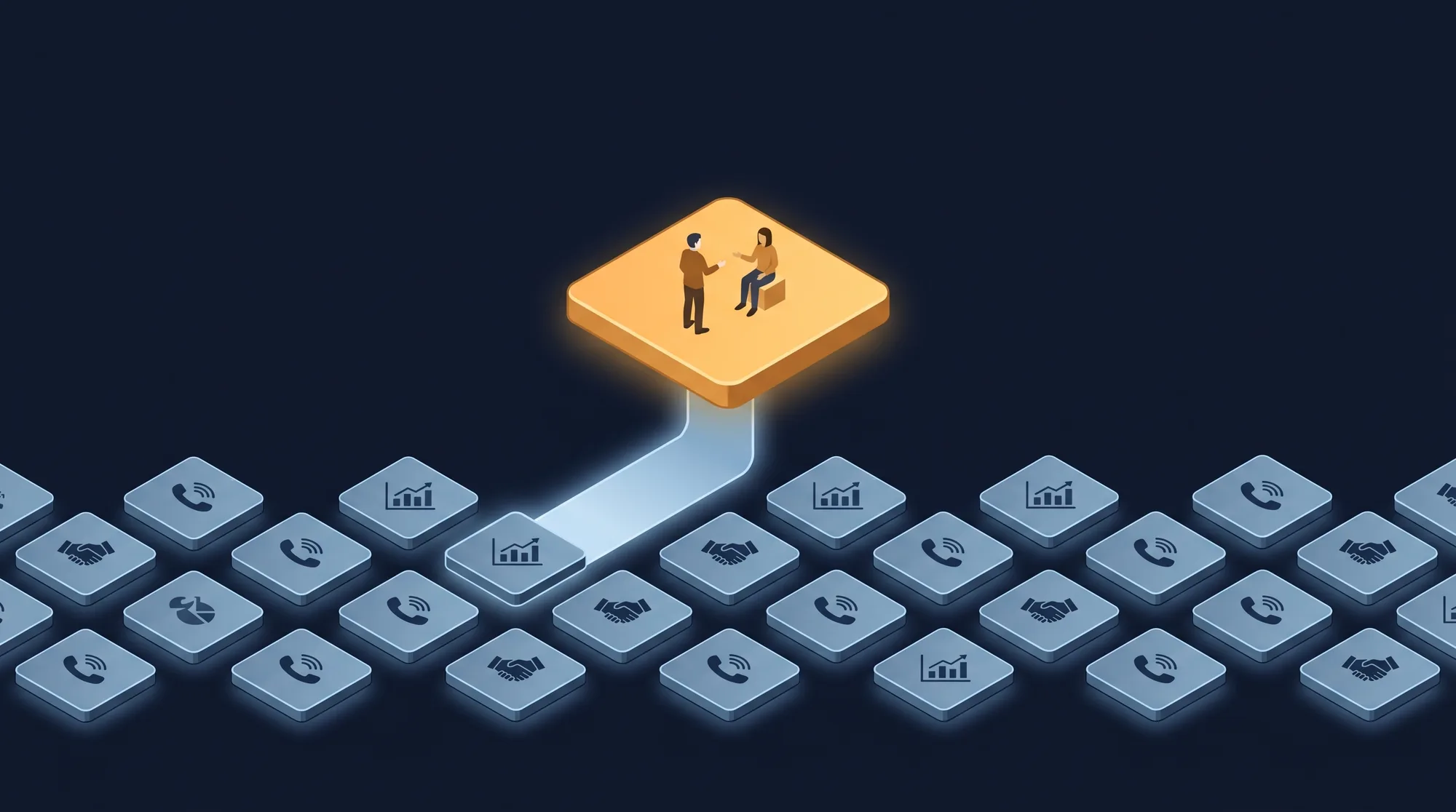
- AI coaches daily. Every deal gets reviewed. Every call gets feedback. Every rep gets methodology reinforcement. Consistently, at scale, without burning out a manager.
- Managers coach weekly. But now the session isn't "let me review your pipeline." It's "I noticed you're struggling with confidence on executive calls. Let's talk about that." The AI has surfaced the patterns. The manager addresses the human behind them.
- The rep improves faster. Because they're getting coaching 5x a week instead of once a month (if they're lucky). Muscle memory builds. Bad habits get caught early. Good habits get reinforced.
That's not replacing the manager. That's giving the manager back the job they were promoted to do.
A real manager's week, before and after
Let me make this concrete, because "give the manager back 3-4 hours" is the kind of phrase that sounds good and means nothing until you can picture it.
Take a manager I'll call Sarah. Ten reps, mid-market SaaS, average deal size around £35k, the usual. Here's her Wednesday before any of this changes.
She arrives at 8:15 and spends 40 minutes in the CRM working out which deals slipped overnight. Two slipped. She blocks 9am for a "coaching" 1:1 with a rep called Tom, but the session is really just the two of them staring at the Acme opportunity trying to work out why the champion went quiet. No skill gets coached. They both leave the call slightly more anxious than they arrived. The rest of her morning is a forecast call and an escalation on a deal that should never have been escalated. By 2pm she has two more 1:1s on the calendar. She runs them at half attention because she is mentally drafting the forecast commentary her VP wants by Friday. One rep, Priya, had a genuinely bad discovery call that morning. Sarah doesn't know, because nobody reviewed it. Priya will make the same mistake on Thursday.
That is not a broken manager. That is a competent manager inside a structure that guarantees the coaching never happens.
Now run the same Wednesday with an AI coaching layer underneath her.
The two slipped deals were flagged at 7am, with the specific reason: no economic buyer identified on one, no defined next step on the other. Sarah reads that in four minutes instead of digging for forty. Tom's Acme deal has already been through a coaching pass overnight; the AI walked Tom through a re-engagement sequence for the quiet champion before Sarah even logged on. So the 9am 1:1 is not a deal autopsy. It is Sarah saying, "I've watched your last three calls. You're strong on discovery and you go quiet the second a buyer mentions budget. Let's work on that, because it's costing you deals you've already half-won." That is coaching. Priya's bad discovery call was scored within minutes of her finishing it; she got specific feedback on the two questions she skipped, and she will not skip them on Thursday. Sarah didn't have to be in the room for any of that.
Sarah's Wednesday did not get shorter. It got better. The same hours now contain coaching that changes behaviour instead of pipeline management wearing a coaching badge. That is the entire shift, and it is worth more than the time saved.
How the transition actually works
Here is the part nobody tells you, and it's the reason a lot of well-intentioned coaching initiatives fail. You cannot fix this by announcing it in a kick-off meeting and hoping managers reallocate their own time. They won't, because the pipeline review is still on the calendar and the coaching still isn't.
The transition has three moves, in order.
First, take the routine coaching off the manager's plate before you ask them to do anything different. The AI reviews every call, every deal, every rep, every day. This is not optional or "when there's time." It runs by default. The manager's job is no longer to find the problems. The problems arrive already found.
Second, change what the 1:1 is for, explicitly. Tell managers, in plain words, that the weekly 1:1 is no longer a pipeline review. The AI did the pipeline review. The 1:1 is now for the one or two things the AI surfaced that need a human: the confidence dip, the skill that isn't building, the rep who's quietly checked out. If you don't redefine the meeting on purpose, it will silently revert to a deal review within a fortnight, because that is the path of least resistance.
Third, measure the manager on coaching depth, not coaching attendance. If the only thing leadership tracks is "did the 1:1 happen", you get 1:1s that happen and coach nothing. Track whether reps are improving on the specific behaviours that got flagged. That is the number that tells you the transition actually took.
Skip any of the three and you end up where most organisations already are: a coaching programme on paper and no coaching in practice.
The bottom line
The coaching crisis in sales isn't about a lack of coaching tools. It's about a structural impossibility in the manager role. We loaded them with 50 hours of responsibilities and then asked them to find 5 more for the most important activity on their plate.
The answer isn't "managers should prioritise better." The answer is "give them a system that handles the volume so they can focus on the impact." That system is how AI sales coaching works when it's built to take the load off managers rather than add to it.
The coaching crisis is a manager crisis. And it's been hiding in plain sight.
If you're a manager drowning in pipeline reviews and forecast calls with no time left to coach, or a rep who's only getting feedback when something goes wrong, try Replicate Labs. AI coaching that fills the gap, daily, for free. Sign up and your first coaching session takes less than 5 minutes.