
When I was running enablement at SimilarWeb, I spent three months and a not-small budget on a "sales enablement platform." I did the demos. I read the G2 reviews. I talked to references. I wrote the business case. The procurement team loved me.
Six months later I realised I'd bought a content management system.
Which was fine. We did need content management. But I'd been trying to solve a behaviour change problem. And the thing I'd bought was never going to solve it, no matter how many playbooks I uploaded into it.
That is the story of sales enablement procurement, and it has been the story for roughly a decade. The word "enablement" is now stretched so wide it covers four different product shapes that do four different jobs. Buyers keep purchasing one shape hoping it will do the job of another, and then blaming the tool when it doesn't.
So this isn't a ranked list of "the ten best enablement platforms." It's a fair, category-by-category walk through the top sales enablement platforms in 2026, with the honest read on what each of them actually does, and a framework at the end for working out which category you even need.
If you're about to sign a contract this quarter, read this first.
The four shapes of "sales enablement"
Before the list, the framework. Every tool below fits into one of four categories. Call them the four shapes of enablement:
1. Content & Engagement. Storing, surfacing, and tracking sales content. What reps send to buyers and what buyers do with it. Big, established category. Gartner Magic Quadrant territory.
2. Readiness & Training. Onboarding, certification, methodology rollout. The LMS replacement corner of the market, often bundled with light coaching features.
3. Revenue Intelligence. Recording, transcribing, and analysing sales calls. Post-call reporting, deal signals, manager dashboards.
4. In-Workflow Enablement. Knowledge, guidance, and increasingly coaching delivered inside the tools reps already use. Chrome extensions, Slack bots, CRM overlays.
There's now a fifth shape, AI Practice and Coaching, and that's where my company (Replicate Labs) lives. I'll cover it directly at the end. But I want to be upfront about something the rest of this guide will keep returning to: AI coaching is not a neat fifth box sitting politely beside the other four. It cuts across them. The reason a rep can't find content, the reason readiness doesn't stick, the reason call insights never change behaviour, and the reason in-workflow tools surface information but not capability: those are all, underneath, the same problem. Reps know more than they do. That's a coaching problem wearing four different category labels.
Most platforms claim to do all four shapes. Almost none are genuinely strong at more than one. They're excellent at the shape they were born as and merely adequate at the rest, regardless of what the website says. Knowing which shape you actually need is most of the procurement battle.
Right, on with the list.
Content & Engagement Platforms
These are the platforms that own the question: "Where is the latest deck, and what happened when we sent it?"
1. Highspot
Highspot has been a defining name in this category for years and is now positioning itself as an "agentic platform for go-to-market teams." The core promise is still the same at its heart: a central library of approved content, surfaced to reps in context, with analytics on what buyers actually engage with.
What they've done well in the last eighteen months is lean into AI. The platform now layers real-time guidance and actions on top of the content, which is a meaningful shift from being a passive content library to being something that nudges reps toward the right play. Training and coaching features have been folded in too, though if training is your primary problem, you'd probably still start with a readiness platform rather than Highspot.
Best for: Mid-market and enterprise teams with a heavy content creation function, a marketing team producing decks and case studies at pace, and a buying cycle that lives on shared content.
Honest read: If content sprawl is your problem (reps sending outdated decks, no version control, no idea what resonates), Highspot handles that. The "agentic platform" positioning is doing a lot of marketing work, though. At its core this is still a content management system with AI layered on, and the coaching and training modules are bundle-fillers, not reasons to buy. If your actual problem is that reps aren't changing their behaviour on calls, Highspot will not fix that. Buying it expecting that outcome is the trap I fell into. That gap is a coaching problem, and it's the one Replicate Labs is built for.
2. Seismic
Seismic is the other heavyweight in this category, often compared head to head with Highspot. They call themselves the Seismic Enablement Cloud and have built out an AI-powered suite that goes from content management into learning, coaching, and buyer engagement.
The Seismic bet has been breadth. They want to own the whole revenue enablement stack, and they've acquired and built to get there. For large enterprises with existing investments in the Seismic ecosystem (particularly for regulated industries like financial services), the integration story is genuinely strong.
Best for: Enterprise revenue organisations that want a single platform spanning content, learning, and buyer engagement, and have the change management capacity to deploy something this big.
Honest read: Seismic is large, and large platforms take time and an enablement team to deploy well. If you've got 200 reps and a small enablement team, the setup and adoption curve is real and often underestimated. The breadth pitch (content, learning, coaching, engagement in one) is exactly the "does everything" promise that leads buyers to over-buy. It does a lot of things adequately; it does content management properly. If behaviour change on calls is the goal, the coaching layer here is not where I'd put my budget.
3. Showpad
Showpad has carved out an interesting position as the "AI-native revenue effectiveness platform" connecting HQ to the field. They're a Leader in the 2025 Gartner Magic Quadrant for Revenue Enablement Platforms.
Their particular edge is in field sales and industries where sellers are literally out in the field: manufacturing, life sciences, industrial products. The mobile experience is strong, the content delivery is built for on-the-go use, and the deal momentum focus differentiates them from the more desk-bound feel of some competitors.
Best for: Organisations with genuine field sales functions, complex products that need configured content per buyer, and a mobile-heavy sales motion.
Honest read: If your reps are office-based SDRs and AEs on Zoom all day, Showpad isn't your first choice, and the "revenue effectiveness platform" label is broader than what the product is, which remains field-oriented content delivery. If your reps are driving between customer sites with an iPad, it fits. Either way, it's a content tool; it won't change what reps do in the conversation itself.
Readiness & Training Platforms
These platforms own: "Are our reps ready, and can we prove it?"
4. Mindtickle
Mindtickle has been the dominant name in sales readiness for a long time, positioned as an AI-powered revenue enablement platform designed to help reps ramp up faster and close more deals. The readiness heritage is clear: the strongest parts of the platform are the assessment, certification, and knowledge validation features.
They've expanded significantly into conversation intelligence (Call AI) and coaching, which makes them a broader revenue enablement platform rather than a pure readiness play. For buyers who see "readiness" as the primary pain (new rep ramp, methodology rollout, certification) Mindtickle is still a natural first call.
Best for: Organisations with frequent hiring, methodology-heavy selling (MEDDIC, Challenger, ValueSelling) where certification actually matters, and enablement teams that measure success in rep ramp time.
Honest read: Mindtickle does a lot, and if genuine readiness (onboarding reps who don't yet know the methodology) is your core problem, the assessment and certification heritage is real. But readiness platforms quietly assume the problem is missing knowledge. For most teams it isn't: the reps know the methodology and don't apply it under pressure. More content and more certification won't move that. If you're a 30-person team you'll also use maybe a third of what you pay for. Where readiness ends and applying it on live deals begins is the handoff to coaching, and that's Replicate Labs' territory.
5. Allego
Allego is the other major name in the readiness and coaching space, and they were recognised as a Leader in the 2025 Gartner Magic Quadrant for Revenue Enablement Platforms. Their platform unifies learning, coaching, content, and digital selling into one stack.
What makes Allego distinctive is the coaching angle. Peer-to-peer video practice, manager review of recorded calls, structured coaching workflows. If your enablement philosophy leans on human coaches reviewing rep performance (rather than AI doing it), Allego is built around that model.
Best for: Organisations where managers are expected to actively coach, where peer learning is a real part of the culture, and where video-based practice and review is the preferred format.
Honest read: Allego's feature set is mature, but the coaching model rests entirely on your frontline managers having the time and skill to review recordings and coach well. Most don't. That's the actual coaching crisis. A platform that depends on the scarce resource being abundant is solving the easy half of the problem. If managers are your bottleneck, an AI coach that works the deal with the rep directly is the more honest answer.
Revenue Intelligence Platforms
These platforms own: "What actually happened on that call, and what should we do about it?"
6. Gong
Gong is the biggest name in conversation intelligence and has spent the last few years repositioning from "call recording with AI" to the "AI operating system for revenue teams." That's a big swing and the platform now includes deal intelligence, forecasting, and increasingly agentic capabilities like their AI Theme Spotter and Gong Assistant.
For sales leaders, the Gong pitch has always been: you cannot coach or forecast what you cannot see, and Gong shows you everything. The call library, the manager dashboards, the deal signals, the search for exactly when a prospect said "budget" or "competitor". It's the established product in the category. Worth being clear-eyed, though: the "AI operating system for revenue teams" repositioning is ambitious branding on top of what is, at its core, still conversation intelligence: recording, transcription, and analysis. Visibility is not coaching.
Best for: Revenue organisations where leadership and managers want visibility into every customer conversation, forecasting accuracy is a board-level metric, and there's a real coaching culture that will actually review what Gong surfaces.
Honest read: Gong is strong at showing you what happened. The open question every conversation intelligence buyer faces is whether your team actually changes behaviour off the back of the insights, or whether the reports just generate more reports. Surfacing that a rep skipped a discovery question is not the same as the rep doing it differently next time. Closing that loop (turning a post-call insight into changed behaviour on the next call) is a coaching job, not an analytics one, and it's where Replicate Labs picks up after the recording stops.
7. Chorus (ZoomInfo)
Chorus, now part of ZoomInfo, is the other major conversation intelligence platform. The product does what Gong does at a fundamental level: records, transcribes, and analyses customer conversations, and feeds insights back to reps and managers.
The differentiator is the ZoomInfo bundle. If your team already uses ZoomInfo for data and signals, Chorus integrates natively and the combined offer is cost-effective compared to buying conversation intelligence separately. For organisations that have standardised on ZoomInfo, Chorus is often the easier procurement.
Best for: ZoomInfo customers looking to add conversation intelligence to their existing data and prospecting stack, and mid-market organisations where bundled platforms beat best-of-breed stacks.
Honest read: If you were buying conversation intelligence as a standalone category and had no existing ZoomInfo relationship, Gong is the more featured product. If you're already paying for ZoomInfo, the Chorus story is very compelling.
In-Workflow Enablement Platforms
These platforms own: "Get the rep the answer where they already work, without another tab."
8. Spekit
Spekit positions itself as a "Rep Acceleration Platform" bringing guidance, answers, and actions into the workflow. They've deliberately stepped away from being a traditional LMS or content library, and built for a company that wants enablement delivered in the flow of work rather than in a separate system.
The core insight behind Spekit is simple: reps don't want another system to log into. They want the right answer in the tool they're already using. Chrome extensions, Salesforce overlays, Slack bots, contextual cards. Spekit delivers enablement to the rep, not for the rep to go and find.
Best for: High-change-velocity teams (constant product launches, frequent process changes, new competitive intel every week), where speed to adoption of new information is the core pain.
Honest read: Spekit is a just-in-time knowledge layer, not a training or coaching platform, and shouldn't be bought as one. If reps can't find the updated pricing sheet, it helps. But surfacing the right objection response in a card is not the same as a rep being able to deliver it under pressure on a live call. Knowing where the answer is and being capable of executing it are different problems. The second one is coaching.
9. Guru
Guru is often thought of as a company wiki, and that undersells it for sales. The in-workflow knowledge layer has genuine enablement implications, particularly with the AI assistant features they've built in over the last year. Reps ask questions in Slack, the AI searches all company knowledge (approved content, playbooks, product docs), and returns a vetted answer.
For sales organisations that live in Slack, where product changes fast, and where the "who do I ask about X" tax is a real drag on productivity, Guru plus a little bit of enablement discipline can replace a surprising amount of what a traditional enablement platform does.
Best for: Teams where institutional knowledge is the bottleneck, product is complex, and the culture is Slack-native.
Honest read: Guru, to its credit, isn't pretending to be a full enablement platform. It won't touch readiness, training, or behaviour change, and doesn't claim to. As a knowledge layer it's solid. But "the rep can retrieve the answer" is the smallest part of the enablement problem. Pair it with a coaching layer for the part that actually moves deals.
AI Practice & Coaching Platforms
These platforms own: "Give the rep deliberate practice and in-the-moment coaching on real deals."
This is the newest category and the one I spend every day in. I'll cover three, including ours.
10. Hyperbound
Hyperbound started in AI roleplay and has expanded into what they're calling a "Revenue Activation Platform." The feature set now combines AI-powered practice (cold calls, discovery, objection handling) with real call scoring and a deal intelligence layer.
They've found genuine product-market fit, with integrations into Salesforce, Gong, Highspot, and Seismic, and a growing base of mid-market and enterprise teams. The AI Scorecard Builder is a clever bit of design: you define what "good" looks like, and the same scorecard grades both practice and real calls, which is a closed loop most roleplay tools miss.
Best for: Teams that want deliberate roleplay practice at scale connected to real call performance, and organisations comfortable with a product in fast evolution.
Honest read: Hyperbound is solid at roleplay practice and at measuring it against real calls. But the model is still scoring reps against a rubric: testing whether a rep clears a standard, not sitting with them on the live deal that's actually stuck. As an AI roleplay layer on an existing stack it's a reasonable pick. It is not deal coaching.
11. Second Nature
Second Nature is one of the longer-standing AI roleplay platforms and has built what you could fairly call the most complete "roleplay-as-course" offering on the market. You upload training materials, the platform generates AI-powered roleplays from them, and reps practise against lifelike AI personas and get scored.
Moving avatars and multi-language support matter if you're certifying global teams at volume.
Best for: Structured onboarding programmes, certification-heavy cultures, and training teams that build courses from materials.
Honest read: The roleplay is only as good as the materials you feed it: generic input, generic roleplay. And the model is certification: it tells you whether a rep can pass a scripted scenario, not whether they're ready for the specific call on their calendar. That's the ceiling on roleplay-as-test, and it's a real one.
12. Replicate Labs
I'm the CEO of Replicate Labs, so take this entry with the appropriate grain of salt. I'll keep it short and factual and let the product CTA below do the selling.
Replicate Labs is a multi-coach AI coaching platform. Keenan, the performance coach, carries memory across a rep's pipeline and helps with deal-specific prep on real, live deals. Caty runs roleplays, coaching conversations, and scorecard-based call analysis. The roleplay rehearses a rep's actual upcoming call rather than a generic scenario.
What we focus on is execution in the field. Not completion rates, not test scores, not module views. What reps actually do differently on calls after using the platform. Roleplay and coaching in the flow of work, white-labelled for methodology partners (Gap Selling, ValueSelling, SBR/QUIS), connected to CRM and call recording tools where they exist.
Best for: Revenue organisations where training-to-field behaviour change is the core problem, teams running a specific methodology that needs to show up on real calls, and partners wanting a white-labelled AI coach under their brand.
Honest read: We're newer than most of the platforms on this list. The bet is that the next decade of enablement is about persistent AI coaching rather than content libraries and one-off training, and we've built the product for that bet. If that bet doesn't match your thesis, Highspot or Mindtickle probably still solve your immediate pain better.
How to actually choose
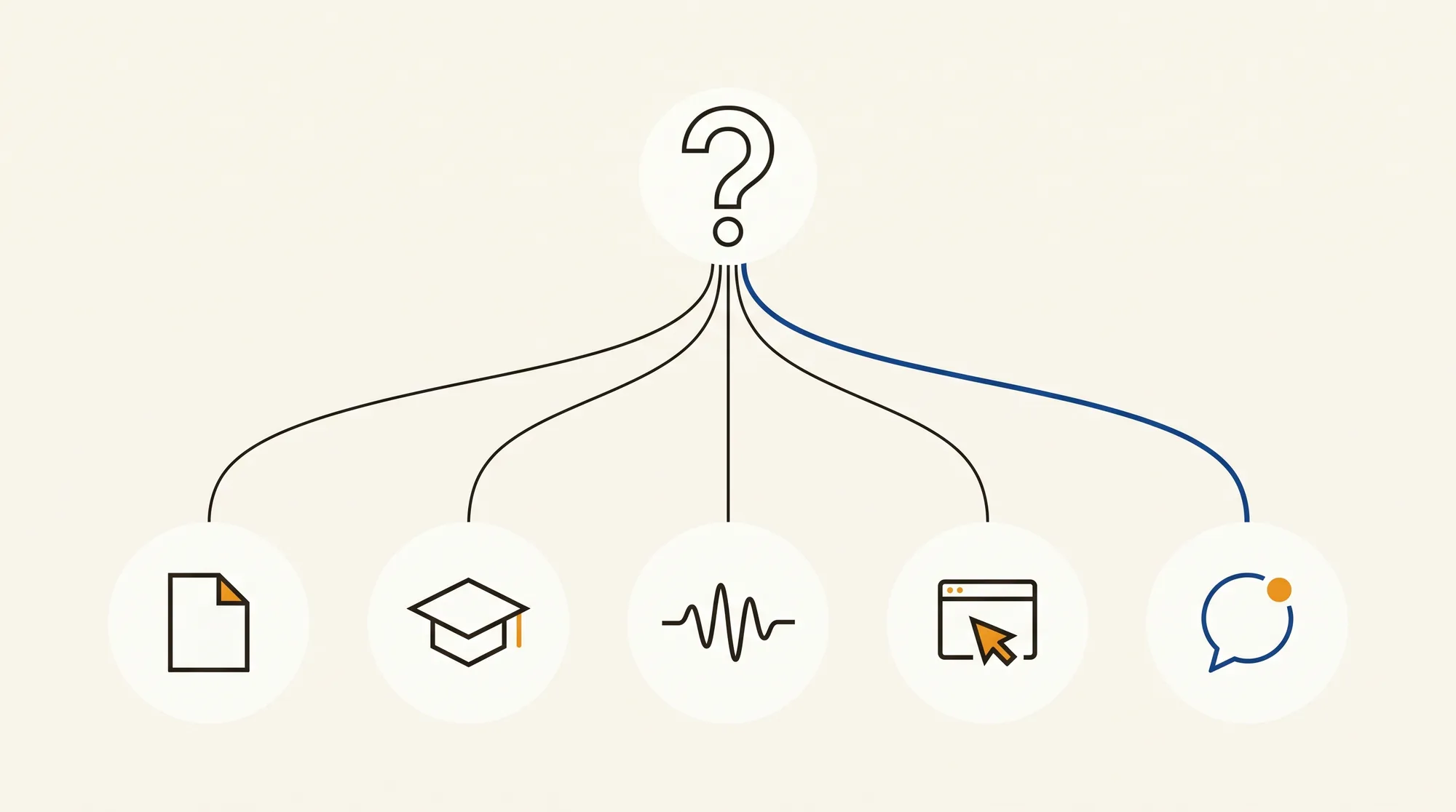
Here's the framework. Skip straight to whichever question matches your actual problem.
Is your core problem that reps can't find the right content, or that marketing has no visibility into what reps send? Content and engagement category. Highspot, Seismic, Showpad.
Is your core problem that new reps take too long to ramp, or that your methodology never sticks? Readiness and training category. Mindtickle, Allego.
Is your core problem that leadership has no visibility into what's happening on customer calls? Revenue intelligence category. Gong, Chorus.
Is your core problem that reps can't find the updated information they need when they need it, where they already work? In-workflow category. Spekit, Guru.
Is your core problem that training doesn't translate to what reps actually do on real calls, and your managers don't have capacity to coach every deal? AI practice and coaching category. Hyperbound, Second Nature, Replicate Labs.
One caveat on that last question, and it's the reason this guide keeps circling back to coaching. Look again at the first four questions. "Reps can't find content" often really means reps don't reach for content because nothing connects it to the deal in front of them. "Methodology never sticks" is a coaching problem with a readiness label. "No visibility into calls" is only useful if the visibility changes behaviour, which is coaching. "Reps can't find information where they work" is the retrieval half of a problem whose other half (can they execute it) is coaching. AI coaching isn't a fifth silo. It's the layer that determines whether the other four turn into changed behaviour or just turn into dashboards. That's why Replicate Labs shows up against most of these categories rather than only the last one.
If you say "all of the above," that's fair, and that's also how you end up with a stack of six tools and an enablement team that spends more time managing vendors than managing reps. Pick the one that hurts most, solve that one first, then come back for the next one. If "behaviour doesn't change on real calls" is underneath several of your answers, start there.
That's it. That's the guide.
Try Replicate Labs free
If the problem you're actually trying to solve is the gap between what reps learn in training and what they do on real calls, that's what we built Replicate Labs for. Our complete guide to AI sales coaching explains how that category works and why it's different from the rest of the stack.
High-quality AI coaching, roleplay, and deal prep. Free to get started. No credit card. Individual reps can sign up and use it today. Managers can deploy it to their teams in hours. Businesses running a specific methodology can white-label it under their brand.
Try it at replicatelabs.ai.
FAQ: Sales Enablement Platforms in 2026
What are the best sales enablement platforms in 2026? The best sales enablement platforms in 2026 depend on what you mean by "enablement." For content management and buyer engagement, Highspot, Seismic, and Showpad lead the category. For readiness and training, Mindtickle and Allego are the established platforms. For revenue intelligence and conversation capture, Gong and Chorus (ZoomInfo) are the major names. For in-workflow knowledge and guidance, Spekit and Guru are strong choices. For AI practice and coaching, Hyperbound, Second Nature, and Replicate Labs are the leading options in an emerging category.
How do I choose a sales enablement platform? Start by identifying which of the four problems you're actually trying to solve: content sprawl, rep readiness and ramp, leadership visibility into calls, or behaviour change on real deals. Each problem maps to a different category of platform. Buying the wrong category is the single biggest mistake enablement buyers make, because every platform claims to solve every problem and the differences only become visible after you sign the contract.
What's the difference between sales enablement and revenue enablement? Revenue enablement is a broader term that includes sales enablement plus customer success, marketing alignment, and sometimes partner enablement. In practice, most "revenue enablement platforms" in 2026 are sales enablement platforms that have expanded their reach. The underlying product categories (content, readiness, revenue intelligence, in-workflow, AI coaching) apply regardless of which label the vendor uses.
Do I need a sales enablement platform if I'm a small team? Probably not a full enterprise platform, no. Small teams often get more value from an in-workflow knowledge tool (like Guru) plus an AI coaching tool (like Replicate Labs, which has a free individual plan) than from a big content and readiness stack. The value of the big platforms scales with team size and complexity. If you're under 30 reps, start with the lightweight stack and upgrade when you feel the pain.
How much do sales enablement platforms cost? Pricing varies widely. Enterprise content and readiness platforms (Highspot, Seismic, Mindtickle, Allego) are typically in the high five figures to mid six figures annually depending on seat count. Conversation intelligence (Gong) is usually mid five figures and up. In-workflow tools (Spekit, Guru) are more accessible, often starting in the low five figures. AI coaching platforms (Hyperbound, Second Nature, Replicate Labs) range from free individual plans to enterprise pricing depending on deployment model. Most paid platforms require an annual commitment and a demo before you'll see a price.
Buy the platform that solves the problem you actually have. Not the platform that promises to solve every problem you've ever heard of.