
Following a recipe to make a meal is still cooking. You're measuring, timing, adjusting for your oven. But when a guest has an allergy you didn't plan for, or the main course is taking longer than expected and you need to rethink the whole evening, the recipe can't help you. That's when you need instinct, experience, and the ability to read the room.
Sales coaching works exactly the same way.
There's a debate happening right now that's driving me slightly mad. It goes like this: "Can AI coach sales reps?" And the two camps line up predictably. One side says yes, AI is the future, human coaches are obsolete. The other side says absolutely not, coaching requires empathy, trust, and human connection.
They're both wrong. Or rather, they're both arguing about the wrong question.
The question isn't whether AI can coach. It's what AI should coach.
Two types of coaching
If you've spent any time in sales leadership, you'll know instinctively that there are two very different coaching conversations happening on any given day.
Deal-level coaching is about the opportunity. What's the current state of this deal? Have we identified all the stakeholders? What's the compelling event? Is our business case quantified? Are there gaps in our discovery? What's our next best action? This is methodology application. MEDDIC, Gap Selling, Challenger, Sandler, whatever your framework is. It's analytical, data-driven, and repetitive.
Rep-level coaching is about the person. Why is this rep struggling with confidence on executive calls? What's happening outside of work that's affecting their energy? Are they motivated by this role or coasting towards a career change? Do they trust their manager enough to be honest about where they're stuck? This is emotional intelligence. It's messy, contextual, and deeply human.
The industry has been trying to make AI do both. That's the mistake.
Where AI is genuinely brilliant
I'll be honest: I used to be sceptical about AI coaching. Not because I didn't believe in the technology, but because I'd seen too many vendors promise "AI-powered coaching" that was really just call recording with sentiment analysis bolted on. (Sorry, couldn't resist.)
But the last 18 months have changed my mind. Not because AI got better at being human. Because it got dramatically better at the analytical stuff.
Here's what AI can do better than any human coach, and I mean that literally:
1. Consistency. A human manager coaches differently on Monday morning (fresh, patient) versus Friday afternoon (tired, distracted, thinking about the weekend). AI coaches with the same rigour on every single interaction. Every deal gets the same depth of analysis. No favourites, no blind spots, no "I'll look at that one next week."
2. Scale. A manager can deeply review maybe 3-5 deals per week. An AI can review every single deal in the pipeline, every day, and flag the ones that need human attention. That's not a marginal improvement. That's a structural shift.
3. Methodology fidelity. Here's one that surprises people. Most sales managers don't apply methodology consistently. They've been doing it long enough that they've developed their own shortcuts and biases. An AI trained on Gap Selling or MEDDIC will apply the framework the same way, every time, across every deal. No drift. No "well, I think in this case we can skip the quantification step."
4. Speed of feedback. A rep finishes a call at 2pm. With a human coach, they might get feedback in their next 1:1, which could be 5 days away. By then, they've forgotten half of what happened. With AI, they get feedback within minutes. The moment of learning is the moment of action.
5. Pattern recognition across the team. A manager might notice that one rep struggles with discovery. AI can identify that 7 out of 10 reps on the team are skipping the impact quantification step, and surface that as a team-wide coaching opportunity. That's the kind of insight that changes enablement strategy, not just individual performance.
Where AI falls flat
Now here's where I give the sceptics their due, because they're right about something important.
AI cannot build trust. It cannot read the room when a rep is going through a divorce and that's why their numbers dropped. It cannot have the career conversation that convinces a top performer to stay instead of taking the offer from a competitor. It cannot be the person who sits across the table and says "I've been where you are, and here's what I wish someone had told me."
Rep-level coaching is fundamentally a human act. It requires vulnerability, judgement, and the kind of contextual awareness that no model, no matter how large, can replicate.
A rep who's lost confidence after three straight lost deals doesn't need an AI to tell them their discovery was weak. They need a human to say, "I know this is a rough patch. I've been there. Let's talk about what's actually going on."
A top performer who's bored and disengaged doesn't need more deal analysis. They need someone to understand their ambition and give them a path forward.
A new hire who's overwhelmed doesn't need a score on their last call. They need reassurance that struggling in month two is normal, and that it gets easier.
That's not a technology problem. That's a human problem. And humans should solve it.
The model that actually works
So here's the frame I wish the industry would adopt:
AI coaches the deal. Humans coach the rep.
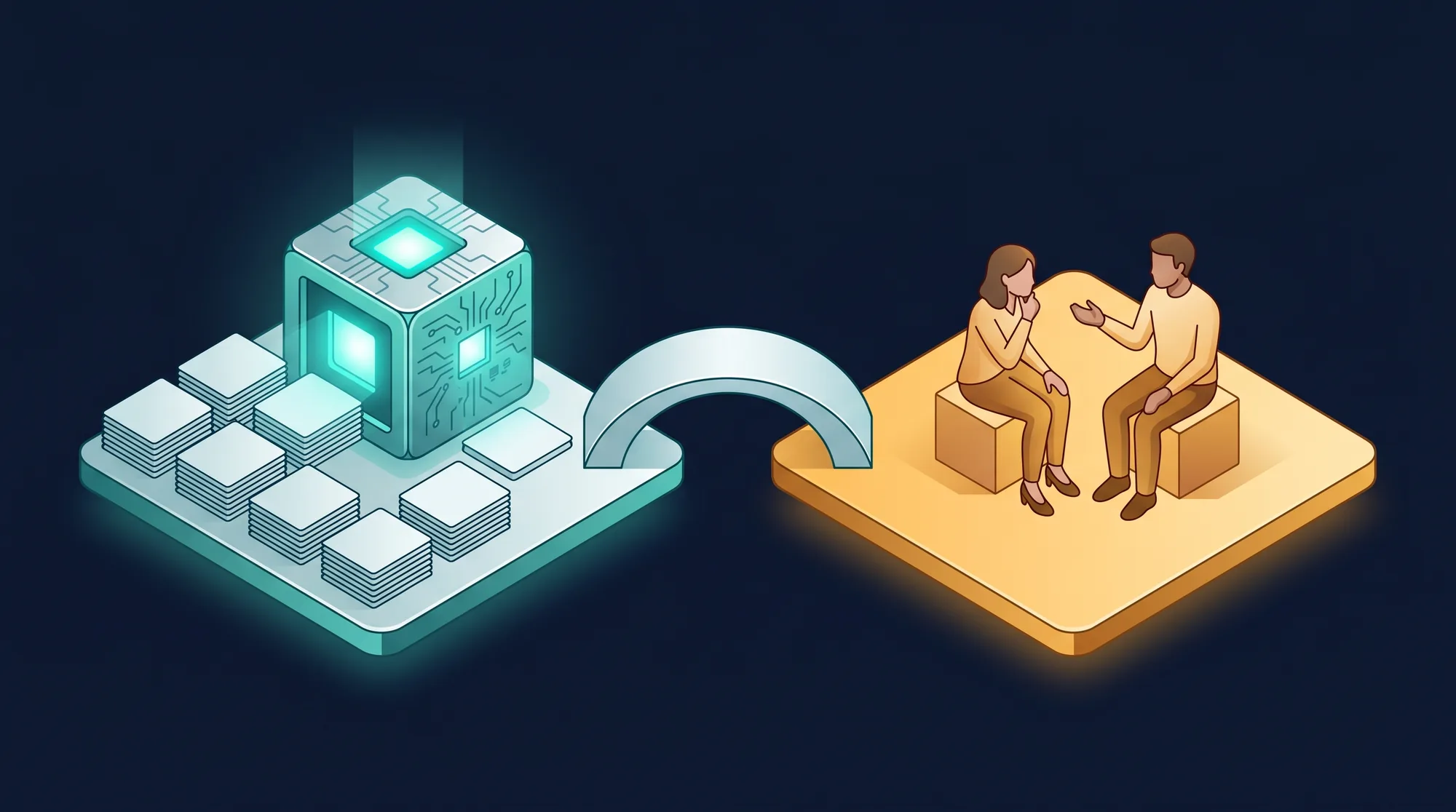
In practice, that looks like this:
- AI reviews every call, every deal, every piece of pipeline activity. It flags gaps in methodology. It identifies at-risk deals. It gives real-time feedback on discovery, objection handling, and next steps. It does this daily, consistently, at scale.
- The manager gets a dashboard that says: "Here are the 3 deals that need your attention. Here's the pattern across your team. Here's the rep who's showing early signs of disengagement." The heavy lifting is done.
- The manager's coaching session becomes genuinely transformative. Instead of spending 30 minutes reviewing pipeline (which the AI already did), they spend 30 minutes on "I noticed your confidence dropped in the last two weeks. What's going on?" or "You've been smashing it. Let's talk about what's next for your career."
The AI handles the volume. The manager handles the human.
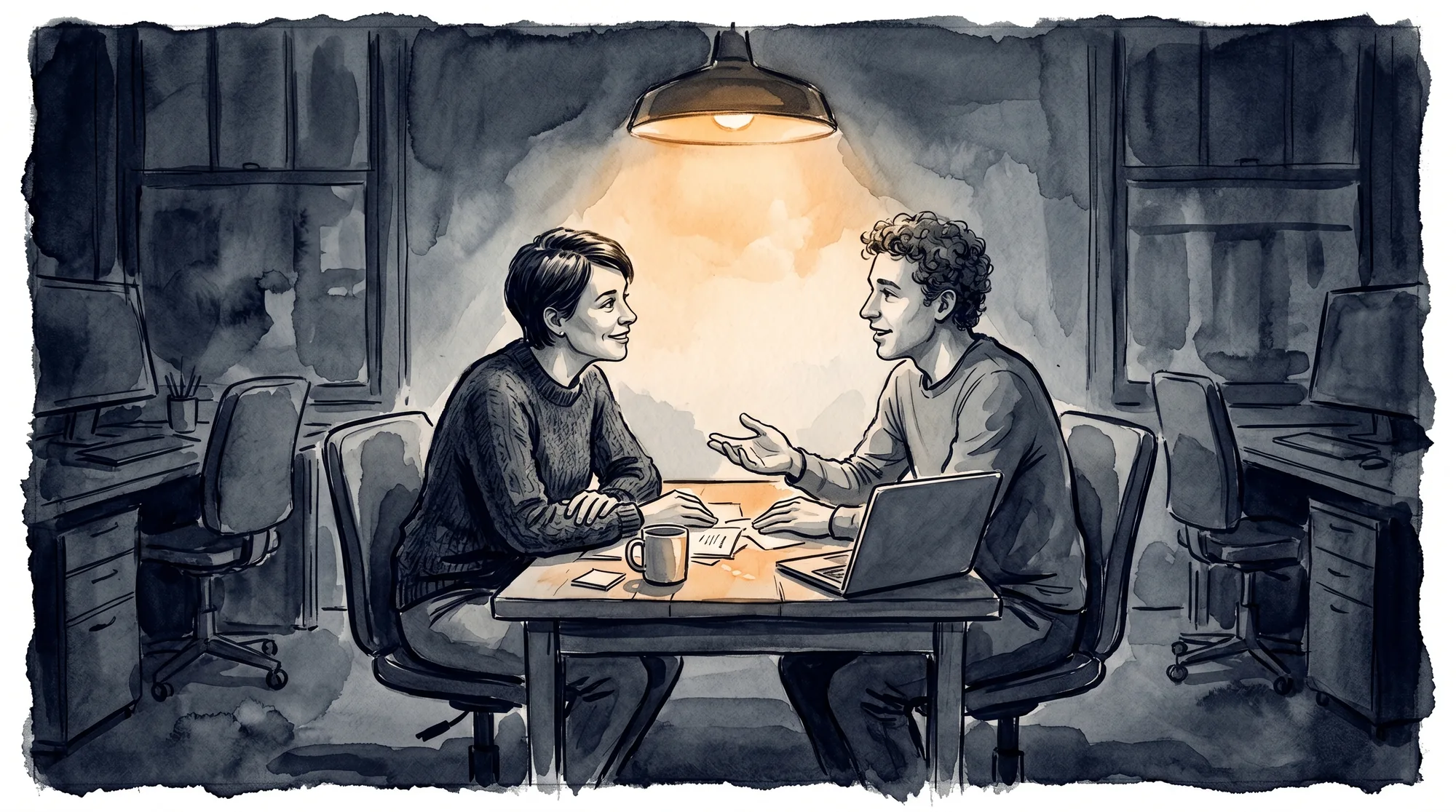
That's not AI replacing coaching. That's AI rescuing it.
Why this matters now
The average sales rep gets fewer than 30 minutes of coaching per month. That's not a stat I invented. It comes from research that's been replicated dozens of times across the industry.
73% of reps say they receive little to no formal coaching, and nearly half rate the coaching they do get as below average. Managers are stretched across 8-12 direct reports with no capacity to coach properly. And the reps who do get coaching often get deal review disguised as coaching, which doesn't address the human factors driving their performance.
We can keep arguing about whether AI coaching is "real" coaching. Or we can accept that the current model isn't working for anyone, and build something better. If you want the full argument laid out, our complete guide to AI sales coaching covers how the deal-and-rep split works in practice.
AI for the deal. Humans for the rep. Both doing what they're actually good at.
That's not a compromise. It's the only model that scales.
Whether you're a rep who wants daily coaching on your deals or a manager who wants to focus your time on what actually matters, Replicate Labs handles the deal-level coaching so humans can handle the rest. Free to start. No gimmicks. Just sign up and coach.