
When I ran customer success at a listed company, the most valuable thing I did wasn't on any job description. People would bring me their deck, their call recording, their account success plan, and I'd go through it in real detail. Properly. Hours sometimes, half a day on a big one. Line by line, what worked, what didn't, what I'd do instead and why.
The feedback those reviews generated was the best coaching some of those people ever got. It became a thing people competed to win. They could see exactly what changed in their work afterwards.
And it didn't scale. The moment more than a handful of people wanted it, I had to start saying no. Not "let me find time." A straight no. There was no version of me that could give twenty people that depth of attention. Pre-AI, that was simply the end of the road.
That's the shape of what's happening to sales coaching right now, across every scaling team, and almost nobody is naming it.
The invisible decline
Here's a number that should make every sales leader pause: the average frontline sales manager is now responsible for 8 to 12 reps. Some organisations push that to 15.
So do the maths on your own team. Set the sliders to whatever's true for your managers (every real thing that eats the week), then look at what's left for each live deal in the pipeline. Not per rep. Per deal. That's the number that decides whether the coaching is real.
How much coaching does each deal actually get?
A 40-hour week is the assumption, and it's the kind version. This counts none of the Slack pings, the "got a sec?" ambushes, the approvals, or the deal that blows up on a Friday afternoon.
Run it with honest numbers and the week doesn't leave a sliver, it leaves a hole. And the unit that matters isn't time per rep, it's time per deal. A manager carrying ten reps with eight live deals each is responsible for eighty deals in motion. Eighty. There is no version of a 40-hour week where each of those gets a real coaching pass: reviewing the calls, diagnosing the skill gap, prepping the next move. The maths doesn't get close. It comes out negative. And everyone knows it.
Frequency is not quality
So what do organisations do? They mandate coaching frequency. "Every manager must have a weekly 1:1 with every rep." Box ticked. Dashboard green.
But nobody asks what happens in that 1:1.
I've sat in on hundreds of these sessions over the years, both as a manager and as someone building coaching tools. Here's what a typical "coaching" 1:1 looks like at a scaled organisation:
- 5 minutes of pipeline review ("Where are you on the Acme deal?")
- 5 minutes of forecasting ("Are you going to hit number this month?")
- 5 minutes of admin ("Have you updated Salesforce?")
- 5 minutes of vague encouragement ("You've got this, just keep pushing")
That's a meeting. It's not coaching. Asking "did you have your 1:1?" is not the same as asking "did the coaching change anything?"
The first question measures process. The second measures impact. And almost every organisation measures the first whilst ignoring the second entirely.
How quality collapses
The coaching quality collapse happens gradually, which is why nobody sees it. Here's the pattern:

Stage 1: The startup
Manager has 3 to 4 reps. She knows every deal, every buyer, every objection. Coaching is specific, contextual, and impactful. Reps improve visibly.
Stage 2: The growth phase
Team doubles to 8 reps. Manager is still good, but coaching becomes less specific. Instead of "on the Henderson deal, I noticed you didn't ask about their evaluation timeline," it becomes "make sure you're covering timeline in your discovery calls." The advice goes from contextual to generic.
Stage 3: The scale
Team hits 12 to 15 reps. Manager is drowning. Coaching is now a series of check-ins. "How's it going? What do you need? Cool, let me know if anything comes up." The manager isn't coaching anymore. She's firefighting.
Stage 4: The collapse
New reps join. The manager doesn't have time to diagnose their specific weaknesses, so she gives the same advice to everyone. "Focus on discovery. Ask more open-ended questions. Don't talk too much." That's not coaching. That's a poster on a wall.
The collapse is invisible because nobody measures quality. They measure whether the meeting happened. They measure whether the form was filled in. They don't measure whether the rep's behaviour actually changed on the next call.
The generic advice problem
Generic coaching is worse than no coaching. I genuinely believe that.
When a rep gets specific, contextual feedback ("on the Martinez call, you missed the buying signal at 14:23 when she mentioned budget approval"), they can act on it immediately. They know exactly what to change and when.
When a rep gets generic advice ("try to listen more"), they nod, they agree, and nothing changes. Worse, they start to believe coaching itself is useless. Not because it is, but because the coaching they're receiving has been diluted to the point of meaninglessness.
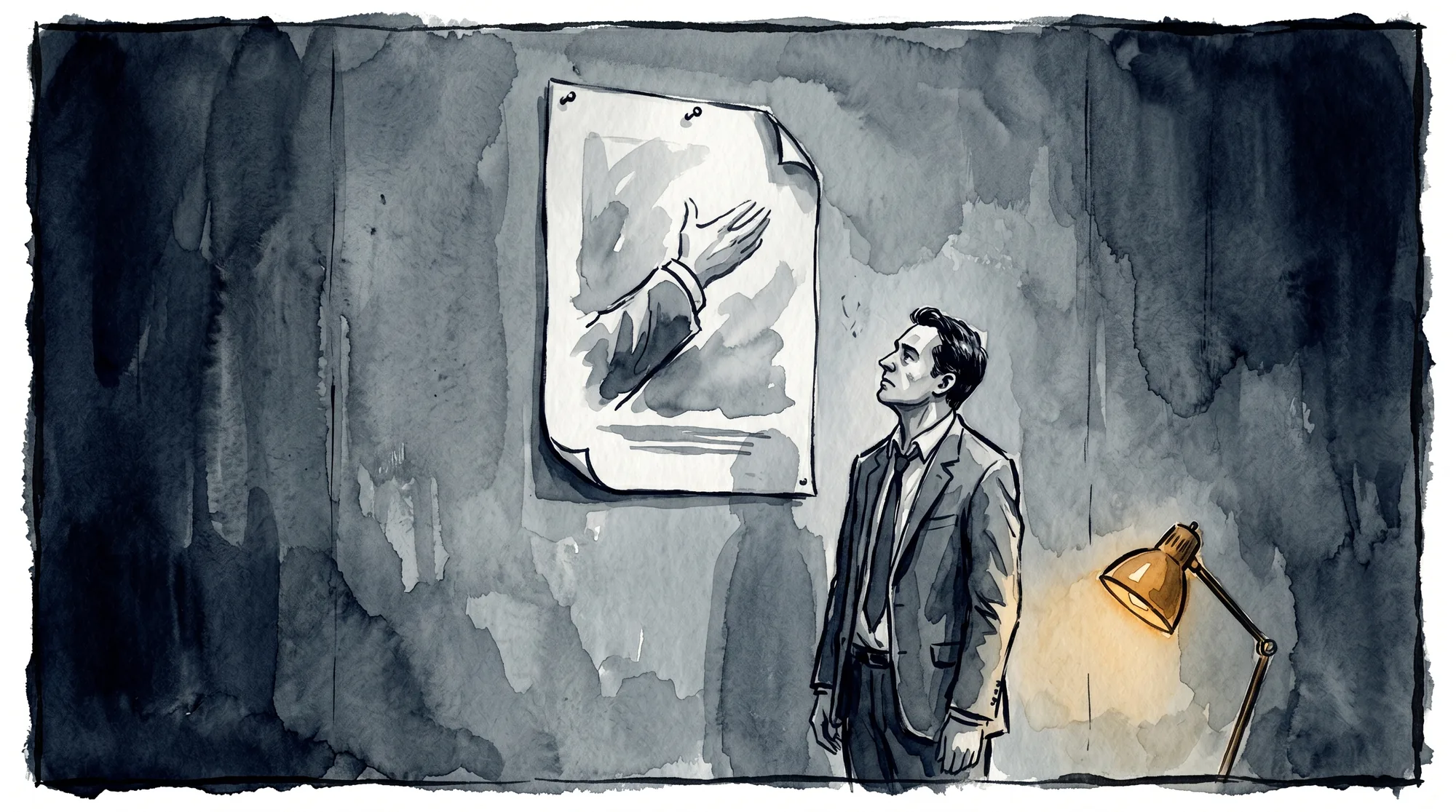
Think about that for a second. The reason so many reps are cynical about coaching isn't that coaching doesn't work. It's that the coaching they've experienced has been so watered down by the time it reaches them that it genuinely doesn't work. The quality collapsed, nobody noticed, and the reps concluded that coaching is a waste of time.
And here's what they do next. They stop asking the manager, because the manager's answer is generic anyway, and they paste the deal into ChatGPT instead. I understand the instinct completely. When I couldn't give people that deep review anymore, the answer used to be nothing. Now the answer is a chat window that's always available and never too busy. But a general model has no methodology, no memory of the rep's last three deals, and no spine. It's not the deep review the rep actually needs. It just feels like one, because it's instant and it's there. The rep has swapped a thinned-out coach for a confident one that knows even less.
The manager isn't the problem
I want to be clear about something: this isn't the manager's fault. Most frontline sales managers I've worked with care deeply about developing their people. They want to coach. They just don't have the time, the data, or the support to do it well at scale.
Asking one human being to provide personalised, contextual, deal-specific coaching to 12 reps, each with 15 to 20 active opportunities, is asking them to do something that's physically impossible. You wouldn't ask one teacher to individually tutor 12 students across 200 different subjects. But that's essentially what we expect of sales managers.
Quality at scale is the actual problem
This is where the conversation about AI coaching usually goes wrong. People frame it as "AI coaching vs. human coaching" as if they're competitors. They're not. As I've argued elsewhere, AI should coach the deal and humans should coach the rep.
The real question isn't "should a robot coach my reps?" It's "how do I maintain coaching quality as my team grows?"
Because right now, the answer is: you don't. Quality degrades as scale increases, and everyone pretends it doesn't because the 1:1s are still happening.
AI doesn't just scale coaching. It maintains quality at scale. That's the distinction nobody talks about.
A well-built AI coaching tool gives every rep the same depth of contextual, deal-specific guidance regardless of whether the team has 5 reps or 500. (For the wider picture, here's how AI sales coaching works and why consistency is the point.) It doesn't get tired. It doesn't get pulled into a forecasting call when it should be prepping a rep for a difficult conversation. It doesn't default to "just keep pushing" because it's had a long week.
The quality floor
What AI creates is a quality floor, a minimum standard of coaching that every rep receives, every time, on every deal.
The best managers will always be better than AI at certain things: reading emotional cues, building personal relationships, providing career guidance. Nobody's arguing otherwise.
But most reps aren't getting coached by the best managers. Most reps are getting 20 minutes of generic advice from an overwhelmed manager who hasn't listened to their calls in three weeks. AI doesn't need to be better than the best manager. It needs to be better than the nothing that most reps actually get.
And that bar is embarrassingly low.
Measure the change, not the meeting
If you take one thing from this, let it be this: stop measuring whether coaching happened and start measuring whether coaching worked.
Did the rep's discovery questions improve after the coaching session? Did their win rate change? Did deal velocity shift? Did they handle the next objection differently?
Those are coaching outcomes. "We had our 1:1" is not a coaching outcome. It's an attendance record.
The quality collapse is already here. Most organisations just haven't measured it yet.
Replicate Labs maintains coaching quality at any team size. Every rep gets contextual, deal-specific AI coaching, whether your team is 5 or 500. Free to get started for reps and managers. Start coaching at replicatelabs.ai