
A few years ago I bought an Oculus Rift.
It was a good headset. I had done the research, read the reviews, watched a man on YouTube describe the future in a very calm and convincing manner. I cleared a space, set up the sensors, played with it for about eleven days. Then it became, slowly and then completely, a thing in a drawer.
It is still in that drawer. It has never once been the headset's fault.
I think about that headset more than I'd like to admit, because it is the exact fear sitting in the back of every sales leader's head when they're about to sign for a new tool. They're not really afraid of the price. They've signed bigger cheques than that. They're afraid of the drawer. They're afraid of standing in front of the team in March and discovering that the thing they championed in January has quietly gone the way of the headset.
Here's the uncomfortable bit. They're usually right to be afraid.
The graveyard is real, and everyone has visited it
There's a number that gets quoted a lot in software circles: roughly half of all software licences a company pays for go essentially unused. I've seen the figure argued up and down, but nobody in the room ever argues that it should be zero. Everybody has a graveyard. Everybody has the sales engagement platform that three people log into. Everybody has the enablement portal with the launch announcement still pinned at the top, dated fourteen months ago.
So when a buyer says "we'll buy it and nobody will use it," they are not being difficult. They are being experienced. They have personally attended the funeral.
And most vendors respond to that fear in exactly the wrong way. They respond with features. More integrations, slicker onboarding, a better dashboard, a mobile app. As if the headset failed because it didn't have enough settings.
It didn't. It failed because strapping it on was a small effort with no deadline attached, and nothing in my day actually depended on me doing it.
Adoption is not a software problem
Let me say the thing the industry doesn't like saying out loud.
A tool does not get adopted because it is good. It gets adopted because using it became easier than not using it.
Those are very different sentences. The first one is about the product. The second one is about the motion around the product, the system you build so that the path of least resistance runs straight through the thing you bought.
Reps are not lazy and they are not stupid. They are busy, and they are rational. A rep has, on any given day, a finite amount of attention and a very long list of things competing for it. A new tool is asking that rep to spend attention now in exchange for a benefit that is vague, delayed, and unproven. From the rep's seat, ignoring the new tool is the sensible move. It is the move I made with the rowing machine, and I run a software company.
If you want adoption, you cannot win that argument with enthusiasm. You have to change the maths. You have to make the first useful experience arrive before the rep has spent any meaningful attention deciding whether to bother. That is what an activation motion is. It's not a launch email. It's a system.
Push gets them in the door. Pull keeps them coming back
There are only two ways a rep ends up in front of a new tool. Either something they were already required to do routed them through it, or they chose to go there on their own.
I call the first one push and the second one pull, and you need both, in that order.
Push is exposure through obligation. You take the programmes the team already has to complete, onboarding, certification, SKO prep, the product launch enablement, the methodology rollout, and you run them through the new tool. Not as a separate thing to remember. As the way the existing thing now happens. The rep isn't choosing to try the new platform. They're completing a certification they were always going to complete, and the platform is simply where that now lives.
Push matters because it removes the hardest decision: the decision to start. It does not, on its own, create adoption. A rep pushed through a tool once and never back is not adopted. They're a statistic. But push gets you the at-bat.
Pull is what happens after a useful at-bat. Pull is the rep coming back, on their own, on a Tuesday, with a real deal that's gone quiet, because the last time they did that they got something useful. Pull is the actual goal. Pull is adoption. And pull cannot be mandated, announced, or bought. It can only be earned, one genuinely useful session at a time.
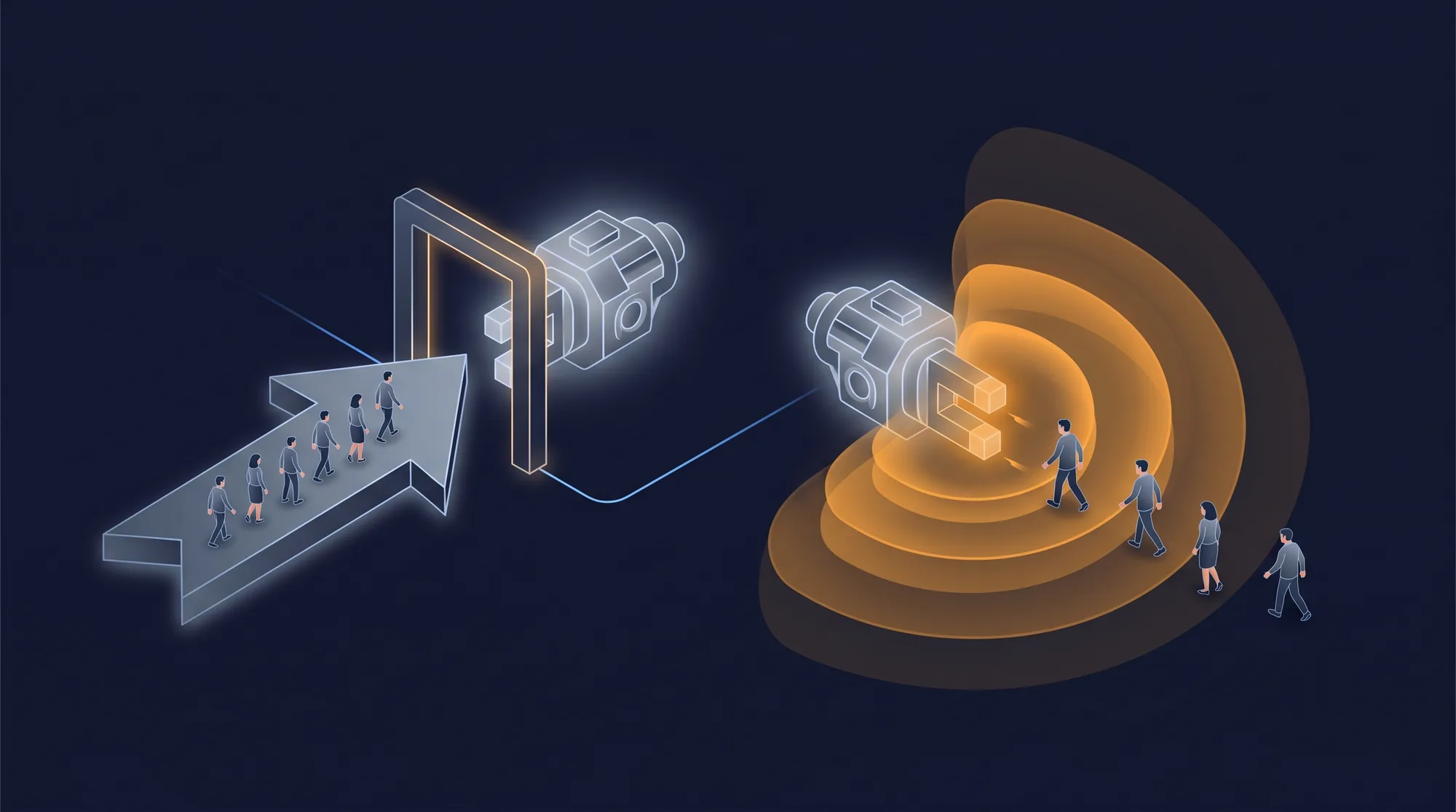
The mistake most rollouts make is doing only one of the two. Pure push without pull is a graveyard with good attendance figures. Pure pull without push is a brilliant tool that twelve people have heard of. You need push to manufacture the first at-bat, and you need that at-bat to be good enough that pull takes over.
The first session has one job
Everything hinges on the first real session. Not the first login. The login is nothing. I've logged into things and felt nothing and never returned, and so have you.
The first real session is when a rep brings something genuine, a stuck deal, a hard call coming up, an objection they keep losing to, the prospect who's ghosted them for three weeks, and gets back something they actually use. A rewritten email. A question they hadn't thought to ask. A clear read on a deal they'd been kidding themselves about.
That's the bar. The rep should leave the first session holding something. If they do, they come back tomorrow. If they don't, no amount of push will save you, because you'll just be pushing people through a turnstile they resent.
So the single most important thing you can do in week one is make sure nobody's first session is a hypothetical. The instinct, when reps try a new coaching tool, is to test it with something fake. A made-up scenario, a generic question, kicking the tyres. That session is worthless, because a coach who works properly diagnoses before it advises, and there is nothing to diagnose in a deal that doesn't exist. The rep concludes the tool is slow and vague. They were just feeding it nothing.
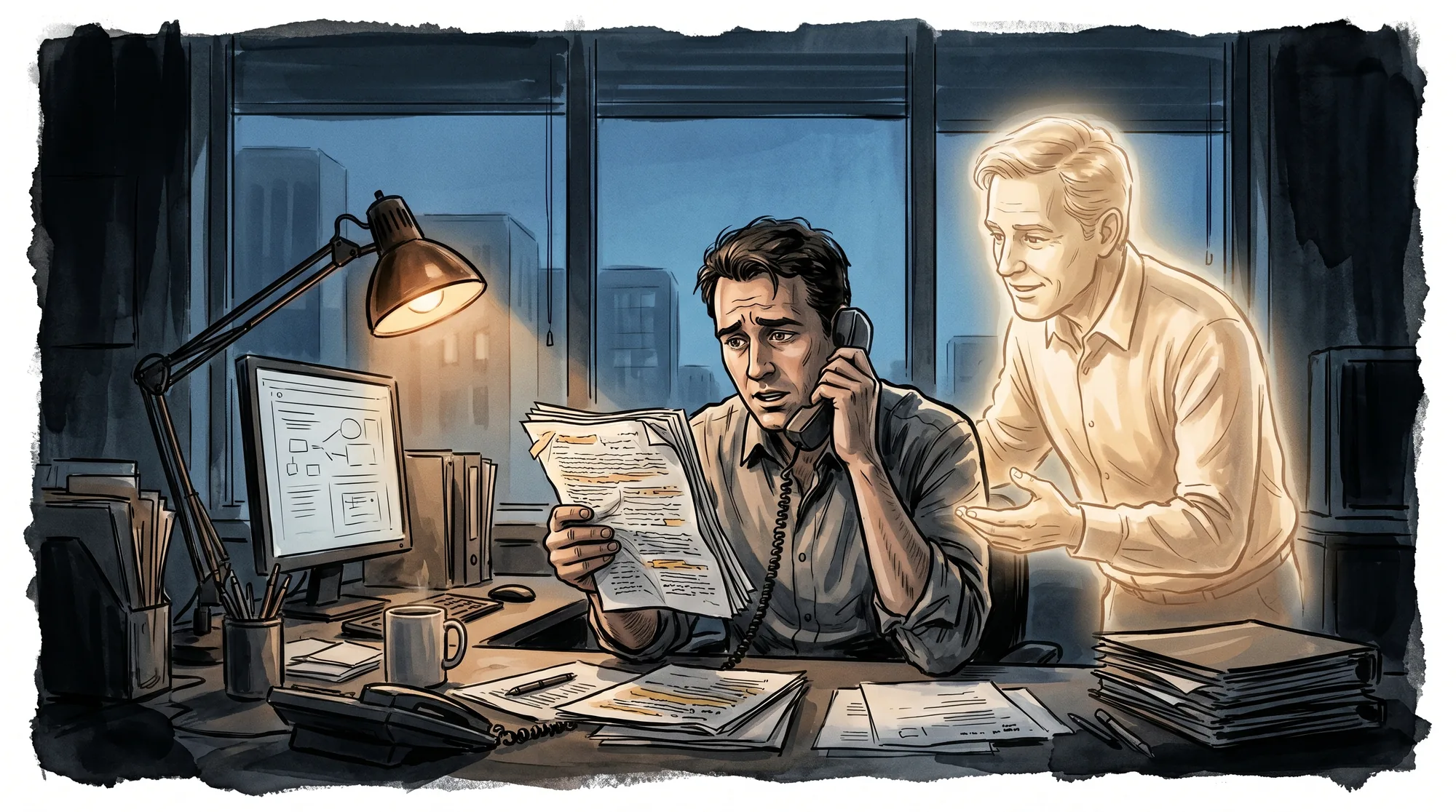
Tell people, plainly, before their first session: bring your worst real deal. The one keeping you up. That is the session that converts the sceptic.
What it actually looks like, week by week
This is the part everyone wants and nobody writes down. So here it is, the activation motion as I'd run it, with the numbers I'd hold myself to.
Weeks 1 to 2. Integration, not invitation. Connect the plumbing first. The CRM, so every coaching conversation already knows the deal and the rep never has to brief the tool from scratch. The call recorder, so the coach sees what actually happened on the call rather than the rep's flattering summary of it. The place the team already works, Slack or wherever, so coaching happens without anyone opening a new tab. Ingest the real material: the playbook, the battlecards, the buyer personas, the competitive positioning. This is what makes the coaching specific to your business instead of generic.
And do not invite everyone. Invite a defined first cohort. A single team, a new-hire group, a pilot. Activation you can actually watch beats a company-wide launch you can only count.
Weeks 3 to 4. The first activation wave. Now the target. At least 30% of invited seats having a genuine first session, with the emphasis on genuine. A rep who logs in, types "hello," and leaves is not in that 30%. A rep who brought a real deal and left with a real next action is.
Watch the gap between seats invited and seats with a genuine session. That gap is your friction, and it's telling you exactly where the problem is. If it's huge, it's the invite, or the onboarding, or confusion about what to bring. Fix the friction, don't just send another reminder.
Then, the most important job of week four: find your first two or three wins. The reps who got the most out of their sessions. Write down what happened. One paragraph each. The problem, the session, the outcome. You are not doing marketing. You are gathering raw material for the next phase, and if you don't capture it now, in the moment, it evaporates.
Month 2. Pull begins. Target around 50% activation. The push motion should now be running live through at least one real programme, so new reps keep flowing through the door without you chasing them.
And here is the single highest-leverage thing you do in the whole rollout. Make one rep a hero. Take the best win from the first wave. Build the short, specific, named, true story. The deal Sarah had given up on. What she brought to the coaching session. What it told her she'd missed. What she did. The meeting that got booked. Then put that story in the channel your team actually reads, not the one they mute.
Pull does not start because you announced a platform. Pull starts because a rep saw it work for someone they know, on a deal that looked like theirs. One real story does more than ten launch emails. It always has.
Month 3 and beyond. Compounding. Target 70%+ and, more importantly, a growing library of those stories. Track returning users specifically. A rep who comes back twice is a converted user. Three times and it's a habit. That number, the percentage of activated reps who came back, is the one that actually predicts whether you have a tool or a graveyard.
By now new hires are onboarding into a team that already has documented wins. They are not being asked to trust a new tool. They are being shown evidence it works for people like them. That is a completely different, and far easier, ask.
Two ways to kill it without noticing
Two failure modes are worth naming, because they're quiet and they're common.
The first is mandating before earning. Push is exposure, not punishment. The moment a tool feels like a compliance stick, reps stop practising and start performing. They do the minimum, they ask nothing real, and the pull motion never ignites because you've taught them the tool is something done to them. Make the first interaction low-stakes. Roleplay prep for a call they've got anyway. Not a certification gate.
The second is letting the data feel like surveillance. Any coaching tool worth having produces data, and a manager who uses that data to catch reps out in public will destroy the thing they paid for. A rep who feels watched asks fewer questions, and a coach you're afraid to ask a stupid question of is no longer a coach. Use team-level patterns in the open, "we're collectively soft on late-stage urgency," and keep the individual coaching for the 1:1, where it belongs. The signal that you've got it right is simple. Reps use the tool more after they learn the data exists, not less.
Back to the drawer
The headset was never the problem. The problem was that I bought a piece of hardware and called it a habit. There was no first easy win, nothing in my week that depended on it, no reason that strapping it on day twelve was easier than not.
A sales tool is exactly the same. The buyer who says "nobody will use it" is not raising an objection you need to overcome. They're describing a real risk, and the honest answer is not "our product is different." The honest answer is: you're right, that's the risk, and here is the motion that beats it. That motion is part of how AI sales coaching actually works, not an afterthought bolted on once the contract is signed.
Buy the tool if you like. But if all you've bought is a tool, go and clear some space in the drawer now.
Or build the motion, and actually get the team using it.