
The numbers are in, and the gap is brutal: TechnologyInSales found that 81% of sales teams say they have adopted AI, but only 19% of reps actually use it. Claimed adoption against real adoption. A four-to-one gap between the dashboard and the desk.
If you're building AI tools for sales, that should make you uncomfortable. If you're buying them, it should make you furious. But before we declare the whole category dead, I'd like to ask two different questions.
What are we actually measuring? And when a rep is in that 19%, what are they actually using?
The 19% are mostly using their own ChatGPT
This is the part the headline number hides, and it's the most important thing in the whole report.
When you look at where AI is genuinely being used in sales, it is overwhelmingly the individual rep self-solving. A personal ChatGPT subscription. Claude in a browser tab. Gemini on their phone. They expense it themselves or they don't expense it at all. It is not the company's AI-native GTM tool. It is the rep going around the stack because the stack isn't giving them what they need.
That distinction matters enormously, and most of the published "AI adoption" numbers quietly erase it.
A "19% use AI" stat does not mean that if you switched on Gong's new AI coaching capability for 100 reps tomorrow, 15 to 19 of them would use it. Realistically, close to none would. What would actually happen is that 15 of them would go and self-solve with their own ChatGPT, unmonitored, exactly as they're doing now.
And rep-chosen, individual-subscription AI is a specific kind of AI use. It is unguarded. It is not aligned to your methodology. It is not aligned to your best practice. Nobody sees the prompts, nobody sees the output, and nobody can coach against it. The rep isn't using AI badly because they're careless. They're using it that way because the org gave them nothing better and they still had a call at 2pm.
So "81% claim it, 19% use it" is two problems wearing one number. The org isn't measuring real adoption. And the real adoption that exists is happening outside anything the org can see, sanction, or improve.
What are we actually measuring?
The wrong scoreboard
Here's what most organisations track when they deploy an AI coaching tool:
- Login frequency
- Completion rates
- Session duration
- Number of practice scenarios completed
- NPS scores from post-training surveys
Sound familiar?
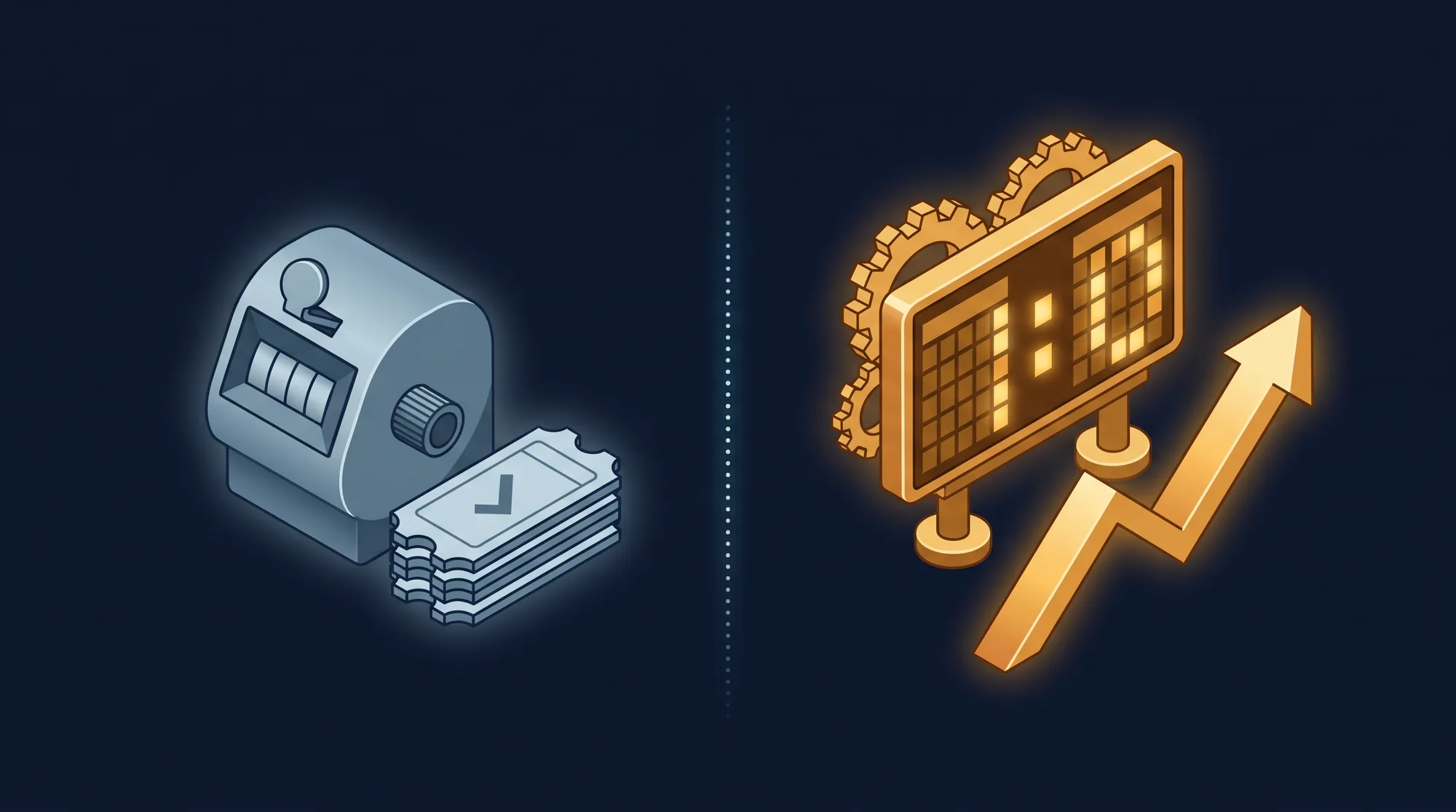
These are the exact same metrics we used to measure e-learning platforms in 2015. They tell you whether someone turned up. They tell you nothing about whether anything changed.
Think about that for a second. We've spent a decade complaining that training doesn't transfer to performance, and now we've built a new generation of tools and we're measuring them with the same broken ruler.
The 19% aren't random
Here's what I find interesting about that 19%. When you dig into who those reps are, a pattern emerges. They're not the ones dutifully completing their assigned coaching modules. They're the ones who opened the tool before a real call. Before a real deal. Before a real conversation with a real buyer who could say no.
The reps who genuinely use AI coaching are using it for actual work, not mandatory training.
That distinction matters enormously. Because it means the tool works. The deployment model doesn't.
It's the difference between assigning someone twelve training modules and putting a coach in the room ten minutes before the call that decides their quarter. One is something they complete. The other is something they reach for. Only one of them survives contact with a real pipeline.

Completion is not competence
I've been on both sides of this. When I ran enablement, I obsessed over completion rates because my boss asked for them. I could produce a beautiful dashboard showing 94% completion across the entire sales floor. Board loved it.
But I knew, in my gut, that those numbers were meaningless. Reps were clicking through modules whilst eating lunch. They were gaming quizzes by process of elimination. They were "completing" things the way I "completed" my PE laps. Present, but not engaged.
The 94% completion rate and the 19% real-usage rate aren't contradictory. They're the same story told from different angles. One measures activity. The other measures impact. And activity without impact is just noise.
What should we measure instead?
If you want to know whether AI coaching actually works, stop measuring the coaching and start measuring the deals.
Here's what I mean:
Win rate on coached deals vs. uncoached deals. Did the rep who used the tool before a discovery call convert at a higher rate than the rep who didn't? That's the number that matters.
Deal velocity. Are coached deals moving through the pipeline faster? If a rep used AI coaching to prepare for an objection-handling call and that deal closed 11 days sooner, that's real.
Average deal size. Reps who understand the buyer's problem better tend to sell bigger solutions. If coaching is improving deal understanding, you'll see it in the contract values.
Rep-initiated usage vs. manager-mandated usage. When reps choose to use the tool, that's a signal. When they're forced to, that's compliance. The ratio tells you everything.
Behaviour change on calls. This is the hardest one to measure, but it's the most important. Are reps actually doing things differently after coaching? Are they asking better discovery questions? Are they handling objections with more confidence? Conversation intelligence tools can measure this. Most organisations don't bother.
What that comparison actually looks like
Here is the test in practice, because "measure win rate on coached deals" is a clean sentence that most teams never actually run.
Take a 20-rep team over a quarter. Don't survey anyone. Tag every deal by whether the rep used the coaching tool to prepare for at least one of its key meetings, discovery or a decision-stage call. Then put the two groups side by side.
A realistic result looks something like this. The coached deals close at 31%, the uncoached deals at 24%. The coached deals spend 11 fewer days in the pipeline on average, because the rep walked into discovery with sharper questions and got to a real next step instead of a polite "let us think about it." Average contract value on coached deals comes in higher, not because coaching is a pricing trick, but because a rep who genuinely understood the buyer's problem sold to the whole problem instead of the slice the buyer first mentioned.
Now look at what your completion dashboard said about those same reps that quarter. It said 91% of them completed their assigned coaching modules. The completion number moved by nothing and predicted nothing. The deal numbers moved by a margin that, on a team carrying £8m of pipeline, is worth more than the entire enablement budget. One of those two numbers is telling you the truth. It is not the one your board has been looking at.
You do not need a data science team to run this. You need one tag on the opportunity record and the discipline to actually look. Most organisations have the tag and skip the looking, because the completion dashboard is already green and green dashboards do not get questioned.
When the comparison goes the other way
I should be honest about the other outcome, because it is the more useful one.
Sometimes you run this and the coached deals do not outperform. The win rates are level. When that happens, the instinct is to conclude the coaching does not work and kill it. That is usually the wrong read. Look one level down. Almost always, what you find is that "used the coaching tool" meant the rep ticked through a module the week before, not that they prepped a specific call with a specific buyer. You measured completion again, just with extra steps.
Re-tag it properly. Coached should mean the rep brought a real deal to the tool and worked it before a real meeting. Run the comparison on that definition. If the gap still does not appear, then you genuinely have a coaching quality problem and you should act on it. But nine times out of ten the gap was there all along, hidden because the tag was lazy. The measurement problem does not just make bad tools look fine. It makes good ones look pointless.
The adoption trap
Here's the uncomfortable truth that nobody in SaaS wants to hear: high adoption does not mean high value.
I've seen tools with 90% adoption where reps secretly loathe every second they spend on them. I've seen tools with 20% adoption where the 20% who use them are the top performers and swear by them.
The question isn't "how many people are using it?" The question is "what happens to the people who use it?"
If only 19% of reps genuinely use AI coaching and those 19% are closing more revenue, you don't have an adoption problem. You have a deployment problem. You're forcing it on people who don't need it in the way it's being delivered, and you're not optimising for the ones who've figured out how to make it work.
Stop measuring the platform. Start measuring the performance.
This is the shift that needs to happen. Not just in AI coaching, but across all of enablement. We've been so obsessed with "did they do the thing" that we forgot to ask "did the thing make a difference?"
Completion rates are vanity metrics. Login frequency is a vanity metric. Session duration is a vanity metric.
Win rate changes. Deal velocity. Revenue per rep. These are the metrics that tell you whether coaching, AI or otherwise, is actually working.
The 81% who claim adoption but never really use it? I'd wager most of them were never given a reason to use it that connected to a real outcome. They were told to complete modules, not to win deals. And when you measure the tool by modules completed, you'll always conclude it doesn't work. Because modules completed has never predicted anything.
The 19% figured it out on their own. They used it for prep, not practice. For deals, not drills. If you want the full picture of how AI sales coaching actually works when it's built around real deals, that's where the 19% started.
The question isn't how to get claimed adoption to 100%. It's how to make the experience of the 19% the default for everyone.
Measure what matters. The rest is just a green dashboard.
Ready to see what AI coaching looks like when it's built for real deals, not completion rates? Replicate Labs gives reps and managers access to high-quality AI coaching, free to get started. No modules. No mandatory training. Just coaching that helps you win. Try it free at replicatelabs.ai