
Roleplay
Personas
What a persona is configured from, how those settings show up in the conversation, and what makes one worth practising against.
A persona is the buyer in a roleplay. It is a configured object, not a prompt someone wrote once, and the fields it carries map directly onto behaviour you will feel in the conversation.
#What a persona is made of
#Where the material comes from
Personas are configured per account, because a persona who is not recognisably your buyer wastes the rep's time.
Good ones are built from things the organisation already has: the titles you actually sell to, the objections that keep coming back, the incumbent you keep displacing, the reasons deals in your business genuinely die, and where relevant a specific live opportunity's own history.
That last case is the strongest. A persona carrying a real deal's history knows what was said on the last call, which turns a rehearsal from theoretical into specific.
#Study the buyer before you practise
The Training Lab lists the personas on your account separately from the roleplay scenarios, and you can open one to read their profile: what they are accountable for, what opens them up, what shuts them down, and the topics they are currently preoccupied with.
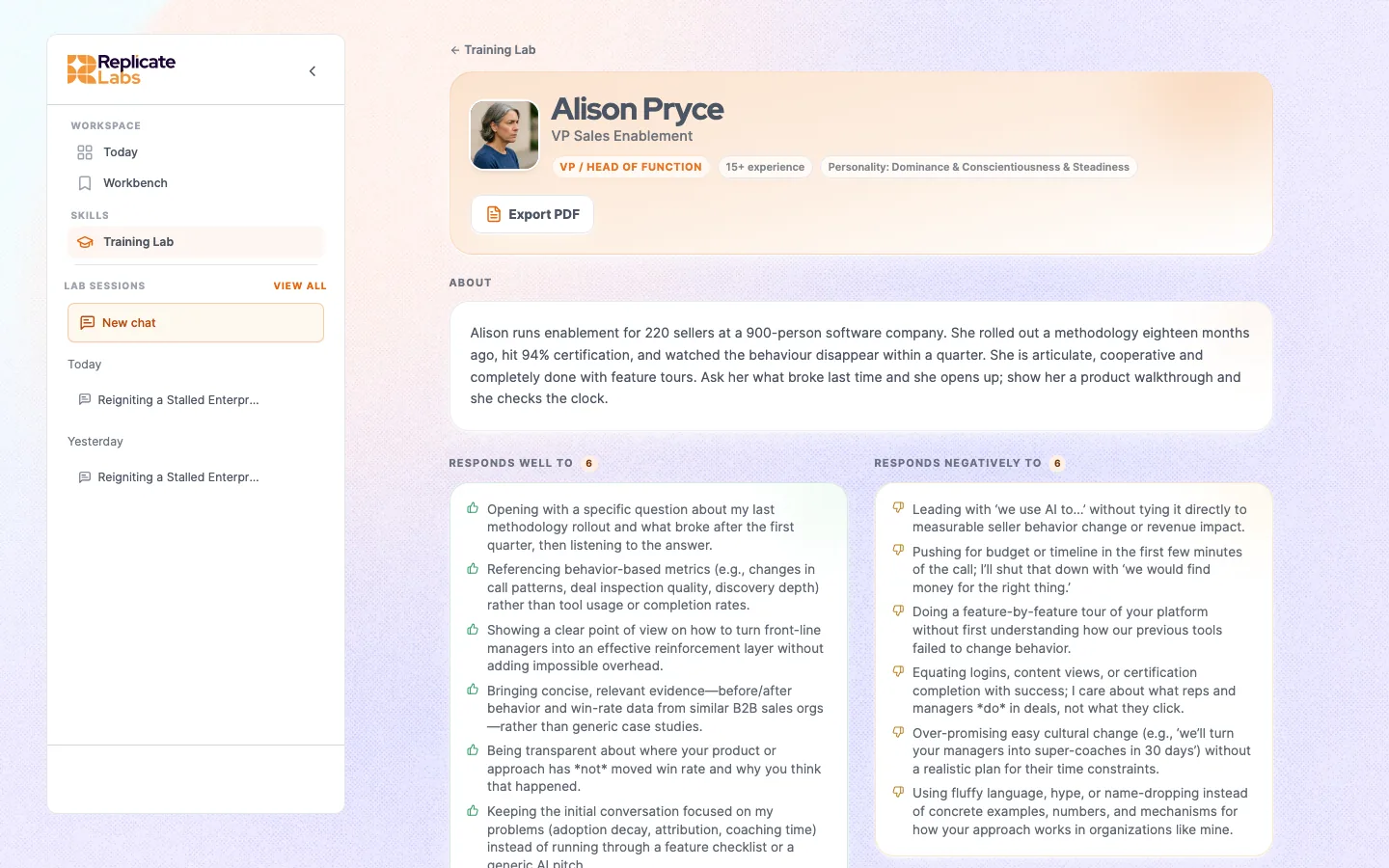
Doing this before you run a scenario for the first time is worth the three minutes. Most reps who feel a roleplay went badly went in without knowing who they were talking to, which is not a mistake they would make before a real meeting.
#Choosing one
Pick the persona for the conversation you are about to have, not the one that will go well.
"I have a first meeting with a finance director who has already told my champion the timing is wrong."
"I will practise against the enthusiastic champion again because I did well last time."
#Personas have faces
A persona can carry an avatar, so it comes up on camera as a person rather than a name. This matters more than it sounds: rehearsing eye contact and reading a face are part of the conversation you are practising for.
#Getting one added or changed
Personas are part of account configuration. If your team is meeting a buyer that no persona covers, or an existing one behaves in a way your real buyers do not, that is a configuration request rather than something changed from the rep surface.
Give your administrator the specifics: the title, what actually opens them up, what shuts them down, and a real objection in the buyer's own words. Those map straight onto the fields above. See Building roleplays.
Last updated 3 September 2026
View as Markdown