
Roleplay
Running a roleplay
Getting into the Training Lab, what happens during the call, and the four mistakes that make a roleplay worthless.
#Getting to it
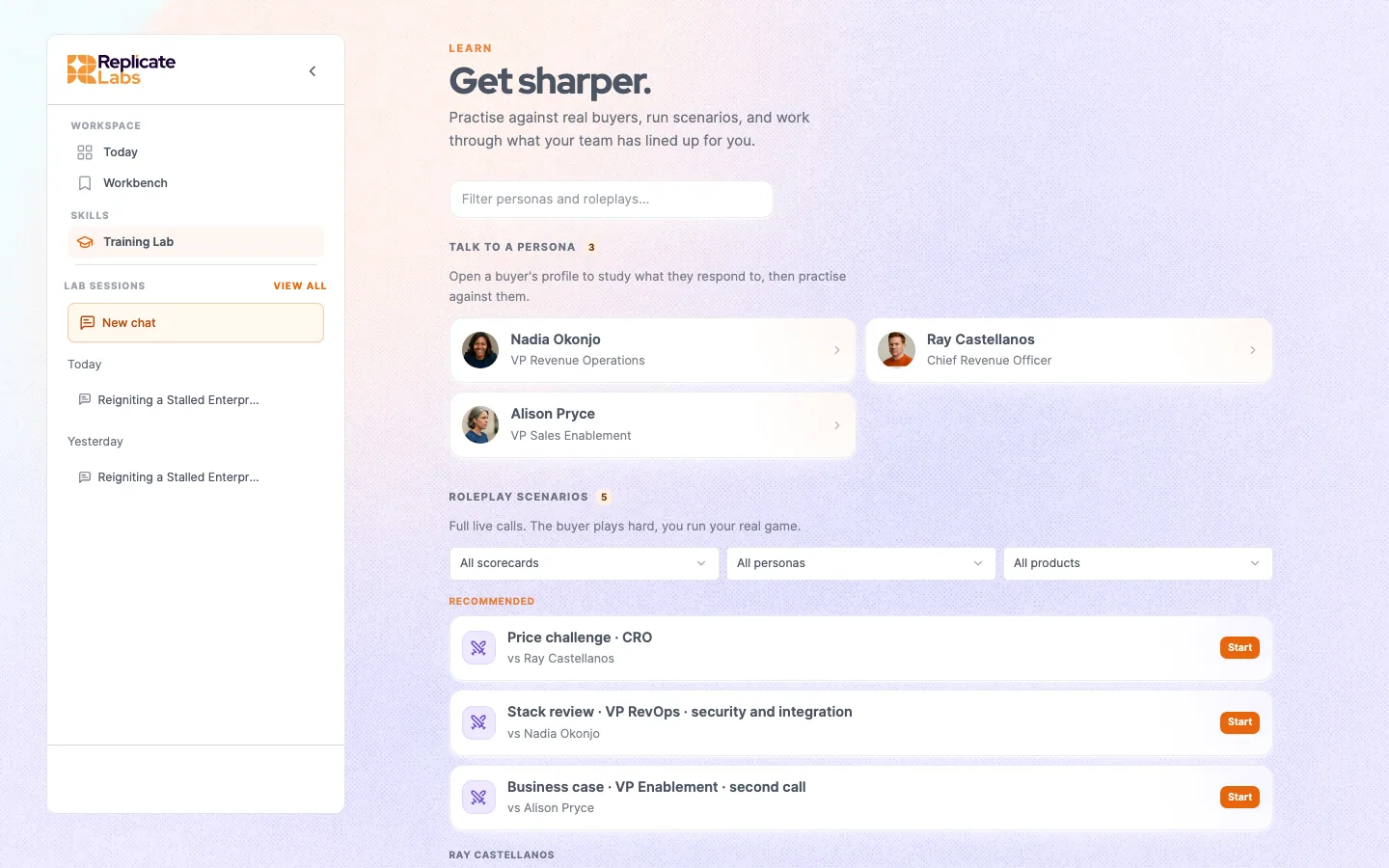
The Training Lab lists what is configured for the coach you are currently on. The platform remembers your last coach selection between sessions, so if the scenarios look unfamiliar, check the coach selector at the top left before assuming something is missing.
#Running it
The Training Lab holds two lists: the personas on your account, which you can open to study a buyer before you meet them, and the roleplay scenarios, which are the conversations you can run. Filters across the top narrow the scenarios by scorecard, persona and product.
#The four ways to waste a roleplay
Running four minutes to "see what it is like" produces a score computed from four minutes of evidence. It will look bad, and it will not mean anything. Either run it properly or do not run it.
Rehearsing the champion call before a first meeting with a CFO is pleasant and useless. Pick the one you are avoiding.
If you know the scorecard rewards confirming impact, you can say the words without meaning them and score well. You will have trained yourself to pass a roleplay.
Running it again straight away tends to rehearse the same mistake more fluently. Take the weak criterion to your coach first, then re-run.
#What the buyer will do to you
A well-built persona is cooperative enough that the conversation goes somewhere and difficult enough to be worth doing. Expect it to:
- give you a vague answer to a vague question, exactly as a real buyer does
- change the subject when you get near something it does not want to discuss
- withhold a number until you have earned it
- warm up or cool down as the conversation goes on, depending on how you handle it
If you ask a lazy question you get a lazy answer. That is the design, not a limitation.
#Ending it
End the call deliberately rather than closing the tab. The grading runs off the completed conversation, and an abandoned session is not the same thing as a finished one.
#If the buyer will not start
Same cause as a coach call that will not start: microphone permission, and it fails quietly. See Troubleshooting.
Last updated 3 September 2026
View as Markdown